RTX 5070 Ti vs RTX 5060: Which 2026 GPU for Your Gaming Rig?
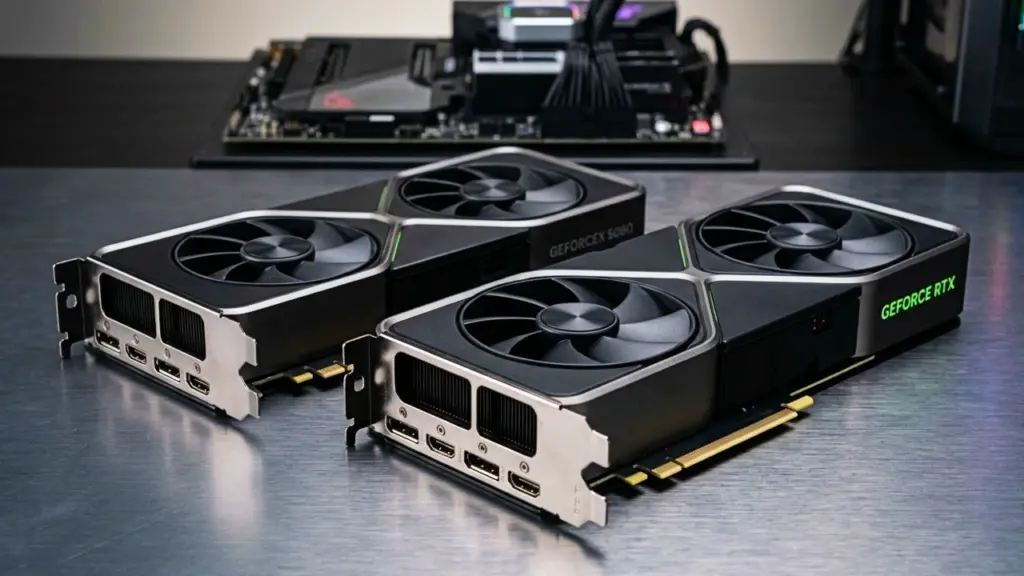
RTX 5070 Ti vs RTX 5060: Which 2026 GPU for Your Gaming Rig?
Alright, let’s cut to the chase. You’re looking at upgrading your rig in 2026 and the NVIDIA RTX 50-series is on your radar. Specifically, you’re probably eyeing the MSI Gaming RTX 5070 Ti 16G SHADOW 3X OC and the PNY NVIDIA GeForce RTX 5060 OC Dual Fan. These cards represent different tiers, and the price difference is noticeable. But is the RTX 5070 Ti worth the premium over the RTX 5060 for your gaming needs? We’re going to break down what you actually get for your money based on specs, target performance, and the trade-offs involved.
As an Amazon Associate, we may earn from qualifying purchases. This does not affect our editorial opinions.
Quick Specs Comparison
| Feature | MSI Gaming RTX 5070 Ti 16G SHADOW 3X OC | PNY NVIDIA GeForce RTX 5060 OC Dual Fan |
|---|---|---|
| Display | Maximum Resolution: 7680 × 4320 (8K) | Max Resolution: 7680 × 4320 |
| Refresh Rate | Depends on Connected Monitor | N/A – Depends on monitor |
| CPU | N/A – Graphics Card Only | N/A – Graphics card only |
| GPU | NVIDIA GeForce RTX 5070 Ti | NVIDIA GeForce RTX 5060 |
| RAM | 16GB GDDR7 | 8GB GDDR7 |
| Storage | N/A – Graphics Card Only | N/A – Graphics card only |
| Cooling | MSI SHADOW 3X triple-fan cooling system with factory overclock up to 2497 MHz | Dual-fan cooling system with OC design |
| Best For | 4K Gaming, Ray Tracing, AI Workloads, Content Creation, Streaming | 1080p Gaming, Esports, Streaming, Content Creation |
| Price Range | High-End Graphics Card | Mid-Range Graphics Card |
| Portability | Desktop Graphics Card (3-Fan Design) | Desktop GPU / SFF-Ready 2-Slot Card |
Quick Verdict
Here is the thing: For most gamers in 2026, especially those targeting 1080p or solid 1440p performance without breaking the bank, the PNY NVIDIA GeForce RTX 5060 OC Dual Fan is likely the smarter buy. It offers a significant leap in performance over previous generations for its class and handles modern titles well. However, if you’re chasing the absolute best at 1440p, want to dabble seriously in 4K gaming, or are heavily invested in ray tracing and content creation workloads that can utilize more VRAM, the MSI Gaming RTX 5070 Ti 16G SHADOW 3X OC is the clear performance king between these two, provided your budget and case can handle it.
Recommended Amazon Picks
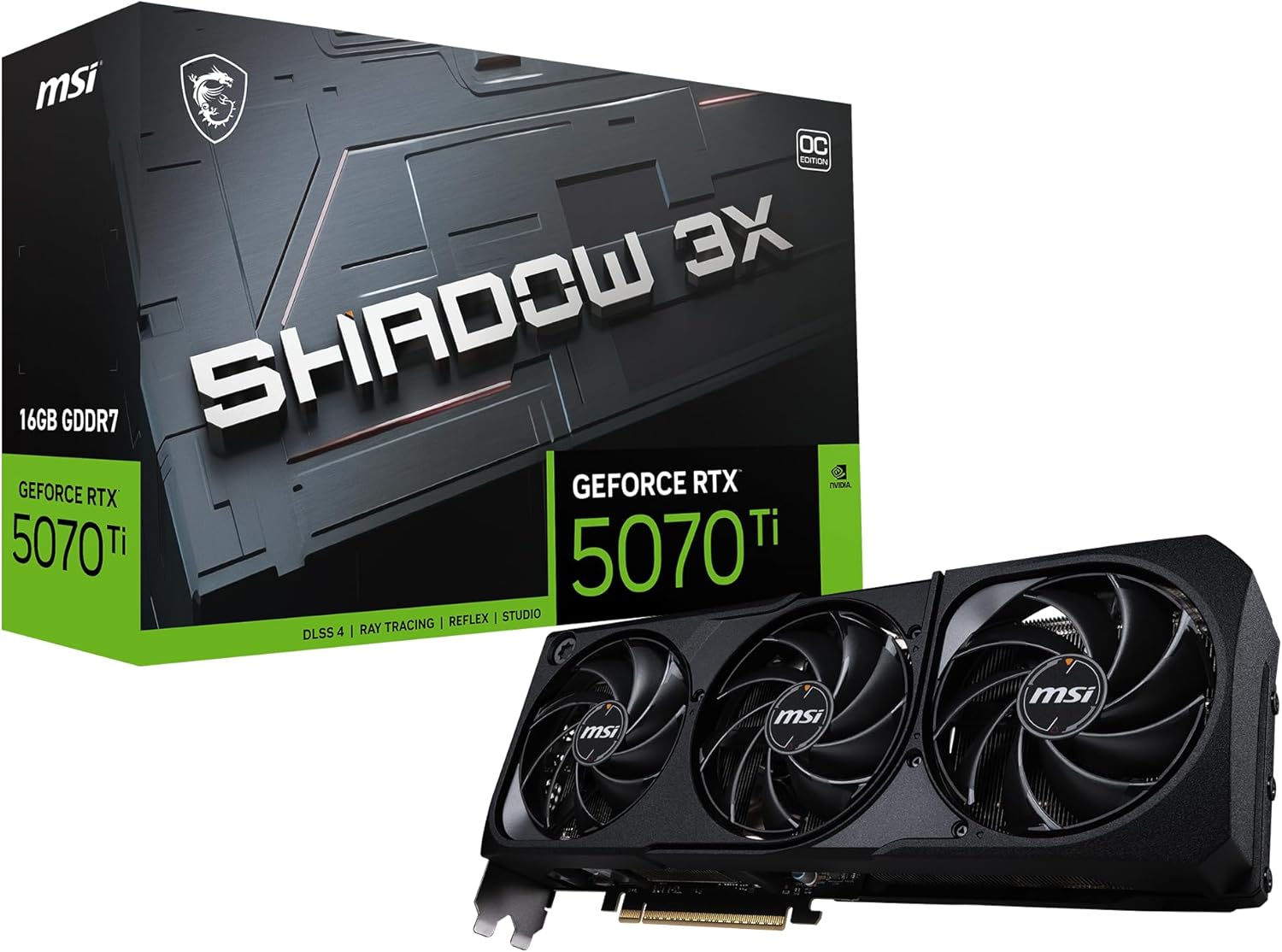
MSI Gaming RTX 5070 Ti 16G SHADOW 3X OC
Best if you want maximum performance and do not mind paying for the larger, heavier setup.
The MSI GeForce RTX 5070 Ti SHADOW 3x OC delivers next-generation gaming performance with NVIDIA Blackwell architecture, 16GB GDDR7 memory, advanced ray tracing, DLSS 4 support, and efficient triple-fan cooling for high-resolution gaming and content creation.
- GPU: NVIDIA GeForce RTX 5070 Ti
- CPU: N/A – Graphics Card Only
- Display: Maximum Resolution: 7680 × 4320 (8K)
- Refresh: Depends on Connected Monitor
- RAM: 16GB GDDR7
- Storage: N/A – Graphics Card Only
- Price: High-End Graphics Card
- Best for: 4K Gaming, Ray Tracing, AI Workloads, Content Creation, Streaming
Pros
- Excellent 1440p and 4K gaming performance
- 16GB high-speed GDDR7 memory
- DLSS 4 support
- Advanced ray tracing performance
- Factory overclocked
- Triple-fan cooling system
Cons
- Large card requires sufficient case space
- High power consumption
- Premium pricing
- May require PSU upgrade
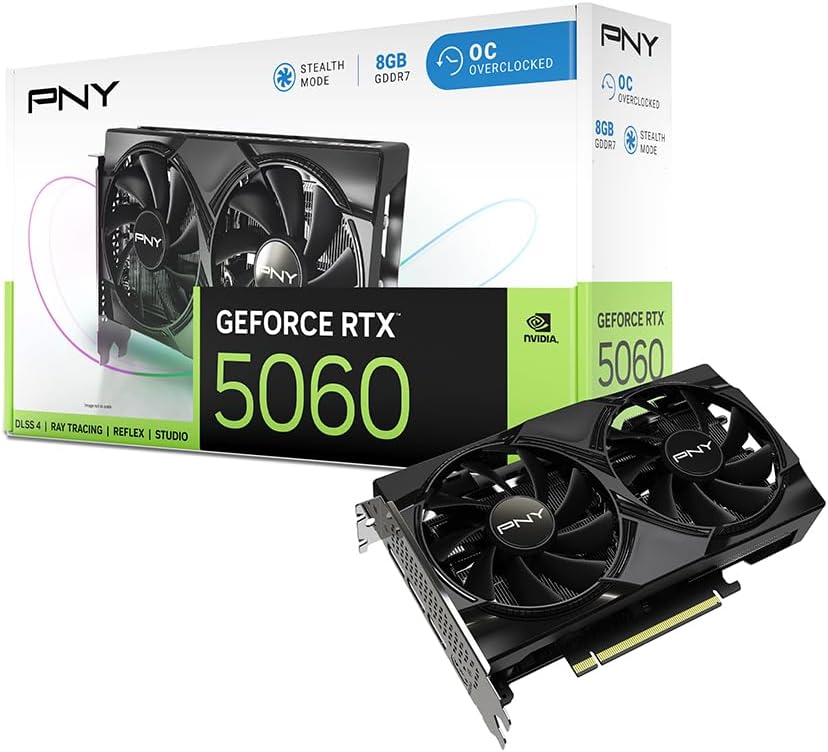
PNY NVIDIA GeForce RTX 5060 OC Dual Fan
Best if smooth competitive gameplay and quick response matter more than luxury extras.
The PNY GeForce RTX 5060 OC Dual Fan is a compact next-generation graphics card powered by NVIDIA Blackwell architecture. It features 8GB GDDR7 memory, DLSS 4 AI upscaling, ray tracing, and PCIe 5.0 support, making it ideal for 1080p and 1440p gaming.
- GPU: NVIDIA GeForce RTX 5060
- CPU: N/A – Graphics card only
- Display: Max Resolution: 7680 × 4320
- Refresh: N/A – Depends on monitor
- RAM: 8GB GDDR7
- Storage: N/A – Graphics card only
- Price: Mid-Range Graphics Card
- Best for: 1080p Gaming, Esports, Streaming, Content Creation
Pros
- Excellent 1080p gaming performance
- Supports DLSS 4 technology
- Latest NVIDIA Blackwell architecture
- Fast GDDR7 memory
- Compact SFF-ready design
- Low power consumption
Cons
- Only 8GB VRAM
- Not ideal for 4K gaming
- Limited memory bus width
- May struggle with future ultra-texture games
Real-World Gaming Performance: Where’s the Difference?
This is where the rubber meets the road. The RTX 5070 Ti, with its more powerful Blackwell architecture cores and wider memory bus, is designed for higher resolutions and higher frame rates. In 2026, you can expect the RTX 5070 Ti to deliver a substantially better experience at 1440p, often pushing well over 100 FPS in demanding AAA titles, even with some settings cranked.
At 4K, it’s a capable card, offering playable frame rates in many games, especially when paired with DLSS 4.
The RTX 5060, on the other hand, is primarily a 1080p champion. It will absolutely crush most games at this resolution, often hitting high refresh rates that are perfect for competitive titles. It can also handle 1440p gaming, but you’ll likely need to dial back some graphical settings in the most demanding new releases to maintain smooth, playable frame rates (think 60 FPS or slightly above).
It’s not really built for serious 4K gaming; you’ll be looking at compromises that might not be worth the effort.
Here is the thing: the gap isn’t just about raw FPS. The RTX 5070 Ti has more VRAM (16GB vs 8GB) and a faster memory interface. This becomes increasingly important in 2026 as games continue to push texture quality and complexity. That 8GB on the RTX 5060 is a potential bottleneck for future-proofing, especially if you plan to play games with ultra-high-resolution textures or use the card for more than just gaming.
Ray Tracing and DLSS 4: Next-Gen Tech
Both cards support NVIDIA’s latest RTX features, including advanced ray tracing cores and DLSS 4. However, the RTX 5070 Ti, with its more solid hardware, handles ray tracing significantly better. If ray tracing is a must-have for you, the 5070 Ti will provide a much more immersive and visually stunning experience with less of a performance hit. You can enable higher ray tracing settings and resolutions more comfortably.
DLSS 4 is a big deal for both cards. It uses AI to upscale lower-resolution images, providing a significant performance boost. The RTX 5060 benefits greatly from DLSS 4, making 1440p gaming much more viable. The RTX 5070 Ti also leverages DLSS 4 to push frame rates even higher, particularly in 4K or with demanding ray tracing effects enabled. Both cards will benefit, but the 5070 Ti has more headroom to push those benefits further.
Thermals, Noise, and Power: The Practicalities
This is where the physical design of the cards comes into play. The MSI Gaming RTX 5070 Ti SHADOW 3X OC features a substantial triple-fan cooling system. This is necessary to keep the more powerful GPU chip cool under load, especially with its factory overclock. Expect it to be a large card, so check your case dimensions. While triple-fan coolers are generally effective, a more powerful GPU often means higher power draw and potentially more noise under sustained load compared to a smaller card.
The PNY RTX 5060 OC Dual Fan, by contrast, is a more compact, dual-fan design. This makes it a great option for smaller form factor (SFF) builds or cases where space is tight. Its lower power consumption means it’s less likely to push your power supply to its limits and generally runs cooler and quieter than its more powerful sibling. This is a significant consideration for many builders.
Value Proposition: What’s Your Budget?
Let’s be blunt: the RTX 5070 Ti is a premium card, and it commands a premium price. It’s for users who want high-end performance and are willing to pay for it. The RTX 5060, while still a new-generation card, sits in a more accessible price bracket. It offers excellent performance for its cost, making it the go-to for mainstream gamers who want a significant upgrade without emptying their wallets.
If you’re building a budget-conscious 1080p or entry-level 1440p rig, the RTX 5060 is almost certainly the better value. You get 2026-level gaming performance without overspending. If you’re aiming for high-refresh-rate 1440p or dipping your toes into 4K, and the budget allows, the RTX 5070 Ti offers a performance jump that justifies its higher cost *if* that performance is what you need.
Who Should Buy Which Card?
MSI Gaming RTX 5070 Ti 16G SHADOW 3X OC
- You primarily game at 1440p and want consistently high frame rates (100+ FPS) in demanding titles.
- You’re looking to game at 4K, even if it means using DLSS or adjusting settings.
- Ray tracing is a high priority, and you want the best visual fidelity possible.
- You’re a content creator, streamer, or work with AI applications that can benefit from 16GB of VRAM and higher GPU power.
- Your budget can comfortably accommodate a high-end GPU, and you have a power supply and case to match.
PNY NVIDIA GeForce RTX 5060 OC Dual Fan
- Your main gaming resolution is 1080p, and you want excellent performance and high refresh rates.
- You game at 1440p but are willing to make some graphical compromises in the most demanding games to achieve smooth frame rates.
- You’re building a more budget-conscious gaming PC.
- You need a compact card for a smaller PC build.
- Power efficiency and lower noise levels are important considerations.
Frequently Asked Questions
Is 8GB of VRAM enough for gaming in 2026?
For 1080p gaming and even most 1440p gaming in 2026, 8GB of GDDR7 VRAM is still generally sufficient. However, as games become more demanding with higher-resolution textures and assets, it can become a limiting factor, particularly in titles that are poorly optimized or push graphical boundaries. The RTX 5070 Ti’s 16GB offers much more breathing room for future titles and higher settings.
Can the RTX 5060 do 4K gaming?
Technically, yes, but it’s not ideal. You’ll likely need to rely heavily on DLSS 4 in its performance modes and significantly reduce graphical settings to achieve playable frame rates (around 30-60 FPS) in many modern AAA games. The RTX 5070 Ti is far better suited for 4K gaming.
Which card is better for ray tracing?
The RTX 5070 Ti is significantly better for ray tracing due to its more powerful architecture and dedicated RT cores. While the RTX 5060 supports ray tracing, enabling it will incur a much larger performance penalty, making it less practical for demanding titles.
Final Verdict
The choice between the MSI RTX 5070 Ti and the PNY RTX 5060 boils down to your target resolution, performance expectations, and budget. The RTX 5060 is the sensible, value-driven choice for the majority of gamers in 2026, offering fantastic 1080p and capable 1440p performance. The RTX 5070 Ti is the enthusiast’s card, delivering a premium experience for high-refresh 1440p, entry-level 4K, and demanding ray tracing scenarios. Make sure you check your system’s power supply and case clearance before opting for the larger, more power-hungry 5070 Ti.
Leave a Reply