Export Controls on Encryption: A History of Futility
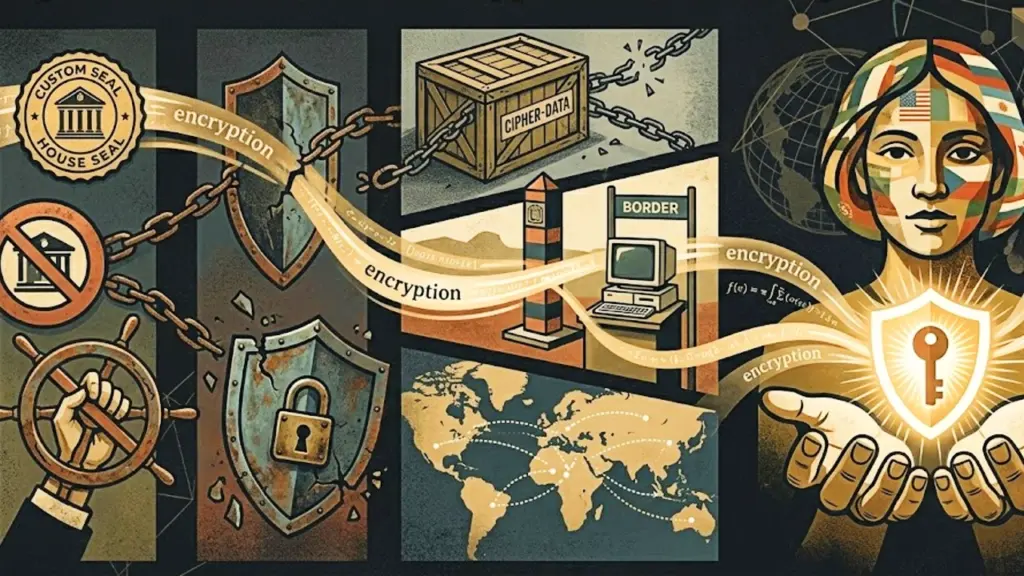
From PGP to Mythos: A History of Export Controls That Didn’t Stop Anyone
The impulse to control the spread of powerful technology is as old as technology itself. When that technology touches upon communication, security, and potentially, state-level surveillance, the impulse intensifies. This has been particularly true for encryption and, more recently, sophisticated cyber tools. A look back, from the early days of Pretty Good Privacy (PGP) to contemporary concerns around tools like Mythos, reveals a consistent pattern: export controls on such technologies have a notoriously poor track record of actually stopping their proliferation.
Quick Take
Governments have historically struggled to effectively control the export of encryption and cyber tools. From the early days of PGP to modern spyware, attempts to restrict these technologies have often been circumvented, leading to widespread availability and questioning the efficacy of such controls in the digital age.
What Happened
The article from TechCrunch, “From PGP to Mythos: a brief history of export controls that didn’t stop anyone,” highlights a recurring theme in the history of technology regulation. It points to how attempts to restrict the export of powerful encryption and cyber tools have consistently faced challenges. The narrative spans decades, referencing PGP, an early and influential encryption program, and more recent developments involving sophisticated cyber tools, exemplified by the mention of “Mythos.” The core argument is that despite governmental efforts to limit the reach of these technologies through export controls, they have largely failed to prevent their spread and adoption globally.
Why It Matters
The persistent failure of export controls on encryption and cyber tools has significant implications for global security, privacy, and the balance of power between states and individuals. For decades, governments have viewed strong encryption as a potential threat, fearing its use by criminals and adversaries to evade detection. This led to early attempts to regulate its export, treating it as a munition.
However, as the TechCrunch article suggests, these controls have proven difficult to enforce.
The history of PGP is a prime example. Developed by Phil Zimmermann in the early 1990s, PGP’s powerful encryption capabilities were, for a time, subject to U.S. export regulations. Zimmermann famously released PGP to the public in a way that arguably circumvented these controls, and the software eventually became widely available. This pattern underscores a fundamental challenge: once the knowledge and underlying principles of strong encryption are public, or the software itself is distributed, it becomes exceedingly difficult to recall or contain.
More recently, the focus has shifted to sophisticated cyber tools, including spyware and offensive cyber capabilities. The mention of “Mythos” in the context of export controls suggests that this challenge has not diminished; it has merely evolved. The proliferation of such tools, whether through leaks, commercial sales to questionable regimes, or independent development, poses risks to national security, human rights, and digital infrastructure.
The article implies that current export control frameworks may be ill-equipped to handle the rapid pace of innovation and the global nature of software development and distribution.
Understanding this history is crucial for policymakers and technologists alike. It suggests that relying solely on export controls to manage the risks associated with advanced cyber capabilities might be a flawed strategy. It prompts a reconsideration of how to address the dual-use nature of these technologies – their potential for both legitimate security purposes and malicious exploitation.
The recurring narrative of circumvention suggests a need for more adaptive and perhaps fundamentally different approaches to cybersecurity governance.
Practical Impact for Readers
For most people, the historical difficulty in controlling encryption exports means that strong privacy tools are more likely to remain accessible, even if governments attempt to restrict them. This can be seen as a net positive for individual privacy and security against surveillance. However, it also means that the same tools, or more advanced versions developed by adversaries, can be used by malicious actors.
The constant cat-and-mouse game between those seeking to secure communications and those seeking to intercept them is a direct consequence of this dynamic.
For businesses and IT professionals, the lesson is that relying on the assumption that certain powerful cyber tools will remain exclusively in the hands of trusted entities is often a losing proposition. Security strategies must account for the potential availability of sophisticated offensive capabilities to a wider range of actors. This reinforces the importance of solid internal security measures, threat intelligence, and incident response planning, rather than solely depending on external controls.
Furthermore, the discussion around tools like “Mythos” highlights the ongoing debate about the regulation of offensive cyber capabilities. While users may benefit from accessible encryption, the potential for state-sponsored or commercially sold cyber weapons to proliferate, despite controls, means that vigilance against state-level threats and sophisticated cyberattacks remains paramount.
Limitations, Risks, and Unanswered Questions
The primary limitation of the historical perspective presented is that it focuses on the *failure* of export controls. While this is a valid and important point, it doesn’t fully explore the *nuances* of these controls. For instance, did these controls at least *slow down* proliferation in certain instances? Did they shape the development or adoption of certain technologies in specific regions?
The article doesn’t look at the specifics of the “Mythos” tool itself, beyond its implication in discussions of export controls. Understanding its capabilities, its intended purpose, and how it might have been disseminated would provide more concrete context. The article also doesn’t detail the specific mechanisms of circumvention for each historical example, which would offer deeper insight into the practical challenges of enforcement.
A key unanswered question is what alternative or complementary strategies governments might employ. If export controls are largely ineffective, what other policy levers can be pulled to manage the risks associated with advanced cyber tools and encryption? This could include international cooperation, norms development, or focusing on end-use monitoring rather than pre-export restrictions.
Finally, the article’s focus is historical. While history offers valuable lessons, the technological landscape is constantly changing. The efficacy of any regulatory approach, including export controls, must be continuously re-evaluated in light of new developments in cryptography, AI-driven cyber capabilities, and global digital infrastructure.
Key Facts
- Historically, export controls on encryption and cyber tools have struggled to prevent their global proliferation.
- PGP (Pretty Good Privacy) is cited as an early example where export controls were challenged and ultimately circumvented, leading to widespread availability.
- More recent sophisticated cyber tools, like the mentioned “Mythos,” continue to be part of discussions around export control effectiveness.
- Governments have treated strong encryption as a potential threat, leading to its regulation as a munition in some contexts.
- The rapid pace of technological development and global software distribution makes containment through export controls exceptionally difficult.
Frequently Asked Questions
What is PGP and why was it significant for export controls?
PGP (Pretty Good Privacy) was an early and powerful encryption program developed by Phil Zimmermann in the 1990s. Its significance lies in its widespread adoption and the fact that its strong encryption capabilities were initially subject to U.S. export regulations, which treated encryption software as a munition. The efforts to make PGP publicly available, despite these controls, demonstrated the difficulty of restricting the spread of solid encryption technology.
How do modern cyber tools like “Mythos” fit into the history of export controls?
The mention of “Mythos” in the article suggests that the challenges of export controls persist with contemporary, sophisticated cyber tools. These tools, which can range from spyware to offensive cyber capabilities, are subject to export restrictions, but their proliferation, whether through leaks, commercial sales, or independent development, continues to raise questions about the effectiveness of these controls, mirroring historical issues with encryption software.
Are export controls on technology completely useless?
While the article highlights their historical ineffectiveness in *preventing* proliferation, it doesn’t definitively state they are *completely* useless. Export controls may still serve purposes such as slowing down proliferation, influencing international norms, or targeting specific actors or end-uses. However, their ability to achieve absolute containment of rapidly evolving digital technologies is severely limited.
What are the implications of uncontrollable cyber tool proliferation?
The uncontrollable proliferation of cyber tools has significant implications. For individuals, it can mean both enhanced privacy (due to accessible encryption) and increased vulnerability to sophisticated attacks. For nations, it complicates national security, as adversaries may gain access to powerful cyber capabilities. It also raises concerns about human rights abuses if such tools fall into the wrong hands for surveillance or repression.
Leave a Reply