Microsoft’s Pecos Datacenter: Fueling AI’s Insatiable Appetite for Power
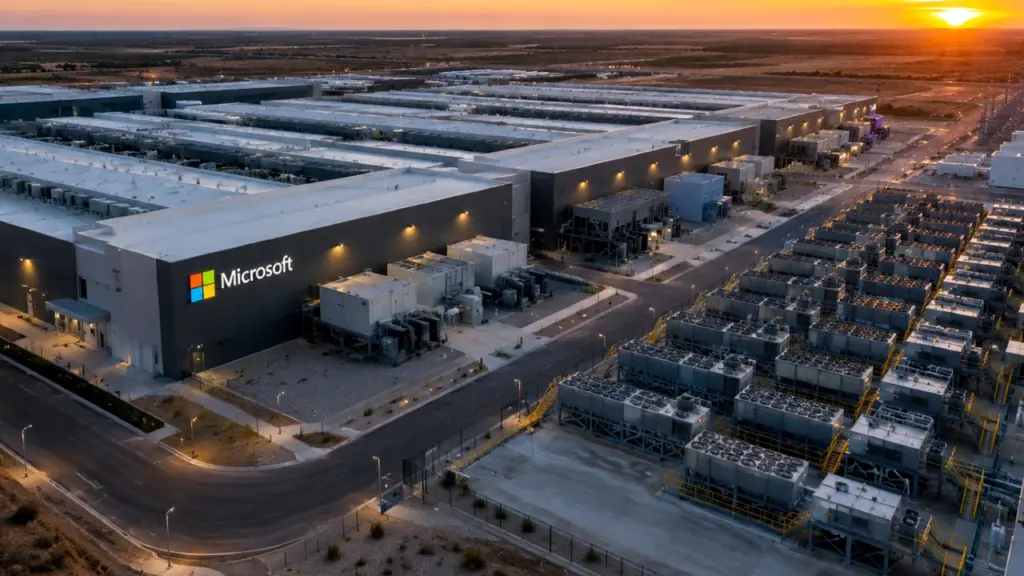
Microsoft Bets Big on Texas for AI Power
Microsoft has announced plans to construct a substantial new datacenter campus in Pecos, Texas. This isn’t just another data center; the company states it represents one of the largest single capacity additions in its history. The goal is to expand its global datacenter capacity by roughly 2 gigawatts (GW). This colossal undertaking is explicitly driven by what Microsoft describes as “strong and sustained customer demand for AI and cloud services across industries and regions.” The announcement, made via Microsoft’s official blog, positions the Pecos facility as a critical component in powering the future of artificial intelligence and broader cloud computing needs.
Quick Take
Microsoft’s new 2GW datacenter in Pecos, Texas, is a clear signal of the enormous and growing energy demands of AI. This expansion highlights the infrastructure race underway to support advanced computing, with significant implications for energy consumption and regional development.

3-in-1 Foldable Wireless Charging Stand For Samsung Phone Watch Buds NEW

3er Smart Tracker Karte für Android google Wallet Finder Ultradünn Aufladbar

What This Means
The sheer scale of the announced capacity addition – 2 gigawatts – is difficult to overstate. To put it in perspective, 2GW is roughly equivalent to the output of two large nuclear power plants or a significant portion of a small country’s total electricity generation. This investment underscores a fundamental reality of the current technology boom: advanced AI models, particularly large language models and sophisticated machine learning operations, are incredibly power-hungry.
They require vast computational resources, which in turn demand massive amounts of electricity to run and, crucially, to cool.
Microsoft’s strategic choice of Pecos, Texas, is also noteworthy. West Texas, particularly the Permian Basin region, has become a hub for energy infrastructure, both traditional and renewable. The area has access to substantial power grids and is a focal point for wind and solar energy development. Building a major datacenter here likely leverages existing or planned energy infrastructure, potentially including renewable energy sources, although the announcement itself does not detail the specific energy mix planned for the Pecos site.
Why It Matters
This expansion is more than just a business decision for Microsoft; it’s a bellwether for the entire technology sector and its relationship with energy. The relentless pursuit of more powerful AI capabilities necessitates a corresponding surge in power infrastructure. Companies are in an arms race not just for AI talent and algorithms, but for the physical capacity to run these models at scale.
Datacenters are the literal engines of the digital economy, and their energy consumption is becoming a primary constraint and a major cost factor.
For Microsoft, this move solidifies its position as a major cloud provider and AI enabler. By securing significant power capacity, it can offer more solid AI services to its customers, from enterprises training custom models to developers deploying AI-powered applications. This also has broader implications for the energy sector, as demand for electricity from datacenters continues to climb, influencing grid planning, energy markets, and the push for sustainable energy solutions.
The choice of Pecos suggests a trend towards locating massive compute facilities in areas with favorable energy economics and potentially access to renewable resources. This could spur local economic development but also raises questions about the strain on local grids and the environmental footprint of such large-scale operations, especially if the power isn’t entirely sourced from renewables.
Practical Impact for Readers
For businesses and developers relying on cloud services and AI tools, this expansion means potentially greater availability and performance for these services. As Microsoft scales up its capacity, it can accommodate more complex AI workloads and support a larger user base. This could translate to faster training times for machine learning models, more responsive AI-powered applications, and increased reliability of cloud-based AI services.
For those interested in the energy sector or regional economics, the Pecos datacenter signifies a significant new demand center for electricity. It highlights the critical role of infrastructure investment in enabling technological advancement and underscores the ongoing debate about how to power the digital future sustainably. It also points to the economic opportunities that large technology infrastructure projects can bring to regions like West Texas.
Limitations, Risks, and Unanswered Questions
While the announcement is significant, several details remain unclear. The exact timeline for the datacenter’s construction and operationalization is not specified. Crucially, the source material does not detail the energy sources that will power this 2GW facility. Given the immense power draw, the environmental impact hinges heavily on whether this capacity will be primarily sourced from renewable energy, fossil fuels, or a mix.
Microsoft has made commitments to sustainability, but the specific energy strategy for this Pecos campus is a key unanswered question.
Furthermore, the announcement focuses on capacity expansion. The specifics of the hardware and networking infrastructure within the datacenter are not provided. While it’s safe to assume it will be state-of-the-art to support AI workloads, details on chip manufacturers (like NVIDIA, a key player in AI hardware) or custom silicon are absent. The long-term operational costs and the exact customer demand it aims to satisfy beyond a general statement are also not elaborated upon.
Finally, the sheer scale of energy consumption for such facilities raises questions about grid stability and the capacity of local infrastructure to support such a load, even in a region known for energy production. Managing such a large energy draw requires careful planning and significant investment in grid upgrades.
Key Facts
- Microsoft is building a new datacenter campus in Pecos, Texas.
- The facility is expected to expand Microsoft’s global datacenter capacity by approximately 2 gigawatts (GW).
- This expansion is driven by sustained customer demand for AI and cloud services.
- The announcement represents one of the largest single capacity additions in Microsoft’s history.
- Pecos, Texas, is located in a region with significant energy infrastructure.
Frequently Asked Questions
What is the primary purpose of Microsoft’s new datacenter in Pecos?
The primary purpose is to significantly expand Microsoft’s datacenter capacity to meet the increasing demand for artificial intelligence (AI) and cloud services from its customers.
How much capacity will the new datacenter add?
The new datacenter campus is projected to add approximately 2 gigawatts (GW) of capacity to Microsoft’s global infrastructure.
Why was Pecos, Texas, chosen for this expansion?
While not explicitly detailed in the announcement, Texas, particularly West Texas, is a region with substantial energy infrastructure and development, likely making it a strategic location for large-scale power-intensive facilities like datacenters.
Leave a Reply