NVIDIA’s AI Push at Cannes Lions Signals a New Era for Advertising
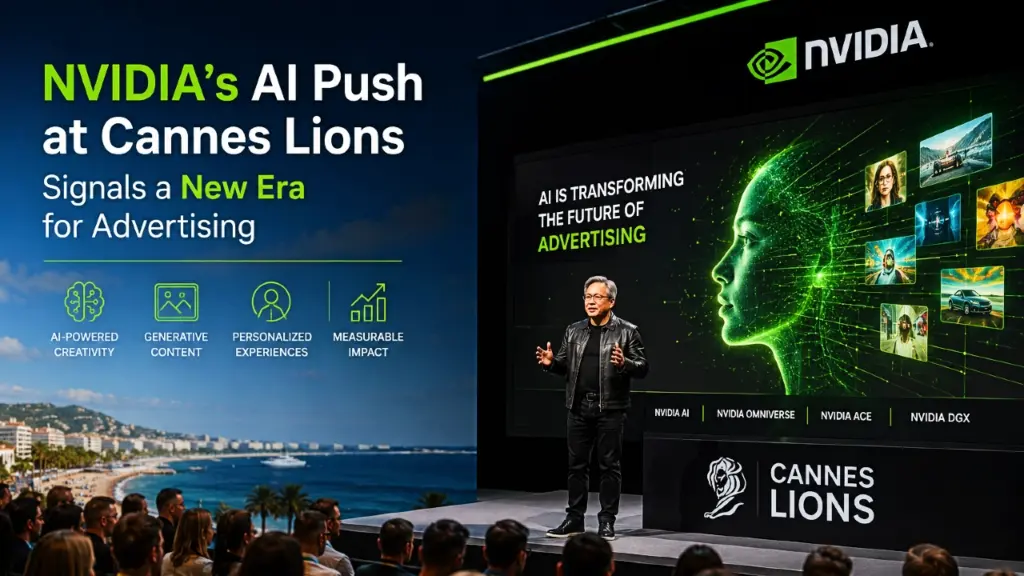
NVIDIA’s AI Ambitions Take Center Stage at Cannes Lions
The annual Cannes Lions International Festival of Creativity is typically a showcase for groundbreaking advertising campaigns and bold creative visions. This year, however, a different kind of innovation is taking center stage: the underlying technology that will power the next generation of marketing. NVIDIA, a company synonymous with AI hardware, is leveraging its presence at the festival to highlight how its partnerships are reshaping the advertising and marketing industry, pushing it towards autonomous operations.
Quick Take
NVIDIA’s strategic partnerships announced at Cannes Lions underscore a critical industry pivot. The focus is shifting from simply generating content faster to enabling marketing and advertising operations to run autonomously, driven by AI. This move requires solid infrastructure capable of handling the immense computational demands of AI at scale.
What This Means: From Speed to Autonomy
For years, the digital revolution promised speed and reach for advertisers. Now, the AI era is promising something more profound: autonomous operations. This isn’t about replacing human creativity entirely, but about automating the complex, data-intensive tasks that underpin modern marketing. Think personalized ad delivery at an unprecedented scale, real-time campaign optimization based on deep consumer insights, and the generation of creative assets tailored to micro-segments of the audience.
NVIDIA’s involvement suggests that the foundational infrastructure – the GPUs, the software stacks, and the AI models – is becoming a key differentiator.
The companies NVIDIA is partnering with are building the tools and platforms that will enable this shift. These aren’t just theoretical concepts; they represent the practical application of AI to solve real-world marketing challenges. The question for these technology providers, and indeed for the entire industry, is no longer *if* they should adopt AI, but whether their current infrastructure can support AI at the speed and scale demanded by global campaigns.
NVIDIA’s messaging at Cannes Lions positions itself as a critical enabler for this transition, providing the necessary computational power and AI frameworks.
Why It Matters: The Infrastructure Backbone of AI Marketing
The advertising and marketing industry thrives on data and rapid iteration. AI, particularly generative AI and agentic AI systems, offers the potential to process vast datasets, identify subtle trends, and execute complex strategies with minimal human intervention. However, these capabilities are computationally intensive. NVIDIA’s focus on providing the underlying infrastructure – from its Blackwell architecture designed for complex AI workloads to its software platforms that simplify AI deployment – is crucial.
Without powerful and efficient hardware, the promises of AI in marketing remain just that: promises.
This development is significant because it moves the conversation beyond creative tools to the operational backbone. Companies like NVIDIA are providing the engines that will drive autonomous marketing. This has implications for efficiency, effectiveness, and potentially, the very structure of marketing agencies and departments. The ability to run AI models at scale, for tasks ranging from audience segmentation and predictive analytics to content generation and media buying, requires a fundamental rethink of technological infrastructure.
It’s akin to the shift from basic computing to cloud computing; the underlying power source dictates what becomes possible.
Furthermore, the push towards autonomous operations suggests a future where marketing campaigns are more dynamic, responsive, and hyper-personalized than ever before. This could lead to more effective advertising, but also raises questions about data privacy, algorithmic bias, and the potential for manipulative practices if not managed responsibly. The partnerships highlighted at Cannes Lions are building the technology, but the ethical frameworks and governance will be equally critical.
Practical Impact for Readers
For marketing professionals, this means a future where AI tools, powered by solid infrastructure, will become standard. Expect to see more sophisticated AI-driven platforms that can manage campaign execution, optimize ad spend in real-time, and even generate creative variations. This could free up human marketers to focus on higher-level strategy, brand building, and complex creative direction.
However, it also implies a need for new skills, particularly in understanding and managing AI systems, interpreting AI-generated insights, and ensuring ethical deployment.
For consumers, the impact could be a more personalized advertising experience, potentially seeing ads that are more relevant to their interests. However, it also brings the risk of increased surveillance and the potential for highly targeted, persuasive messaging that blurs the lines of influence. The efficiency gains for advertisers might translate into more effective campaigns, but the consumer benefit hinges on responsible AI implementation.
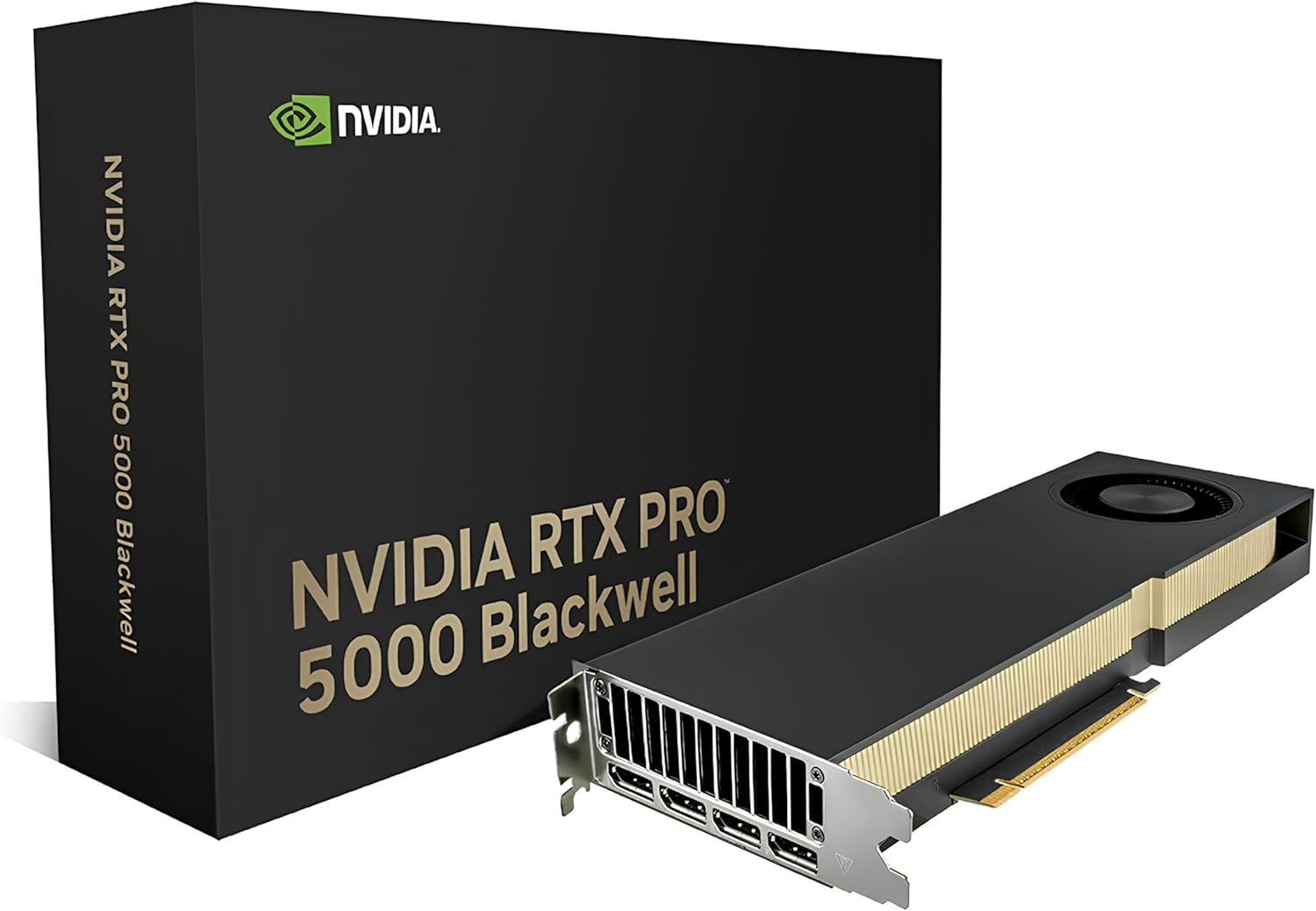 Product image
NVIDIA RTX PRO 5000 Blackwell Graphics Card
48GB GDDR7 ECC Memory, PCIe 5.0 x16, 4X DisplayPort 2.1b, Dual Slot Full Height AI Workstation GPU, Retail Packaging|
Product details are provided by the site editor. Check Amazon for the latest price and availability.
Limitations, Risks, and Unanswered Questions
While the potential is immense, several factors remain unclear. The specific details of many of these partnerships are not fully disclosed, leaving open questions about the exact functionalities and the extent of autonomy these AI systems will achieve. The timeline for widespread adoption and the true cost of implementing such AI-driven infrastructure are also significant unknowns.
A key concern is the reliability and accuracy of AI in complex marketing scenarios. Can AI truly understand nuanced brand messaging or predict consumer sentiment with the precision required for high-stakes campaigns? The potential for algorithmic bias, where AI systems inadvertently perpetuate or amplify existing societal biases present in training data, is another critical risk that needs careful mitigation.
For example, an AI optimizing ad spend might inadvertently favor certain demographics based on historical data, leading to discriminatory outcomes. The ethical implications of fully autonomous marketing, including issues of accountability when AI makes errors or causes harm, are still being debated and defined.
Furthermore, the reliance on powerful, specialized hardware like NVIDIA’s also raises questions about accessibility and market concentration. Will this technology be available to smaller businesses, or will it further entrench the dominance of large corporations with the resources to invest in advanced AI infrastructure? The energy consumption of these powerful AI systems is another environmental consideration that warrants attention.
Key Facts
- NVIDIA is highlighting its role in reshaping advertising and marketing at Cannes Lions.
- The industry is transitioning from speed to autonomous operations powered by AI.
- AI requires significant computational infrastructure to operate at scale.
- NVIDIA’s partnerships focus on enabling next-generation advertising and marketing technologies.
- The shift towards AI-driven operations necessitates solid infrastructure capable of supporting AI at speed and scale.
Frequently Asked Questions
What is the main takeaway from NVIDIA’s presence at Cannes Lions regarding AI and marketing?
The main takeaway is that NVIDIA is positioning itself as a key enabler for the advertising and marketing industry’s transition towards AI-driven autonomous operations, emphasizing the need for solid underlying infrastructure.
How does AI change the advertising and marketing industry, according to NVIDIA’s announcements?
AI is shifting the industry from focusing on speed to enabling autonomous operations, allowing for more intelligent automation of complex tasks like personalized ad delivery and real-time campaign optimization.
What is the role of infrastructure in AI-powered marketing?
solid computational infrastructure, such as that provided by NVIDIA, is essential to support the immense processing demands of AI models at the speed and scale required for modern advertising and marketing campaigns.
What are the potential benefits of AI in advertising and marketing?
Potential benefits include increased efficiency, hyper-personalization of ads, real-time campaign optimization, and the automation of complex data analysis and content generation tasks.
What are some of the risks associated with AI in marketing?
Risks include algorithmic bias, data privacy concerns, the potential for manipulative advertising, ethical challenges related to accountability, and the concentration of power among companies with advanced AI infrastructure.
Leave a Reply