NVIDIA Blackwell’s Early Lead in Agentic AI Benchmarking: What It Means for Infrastructure
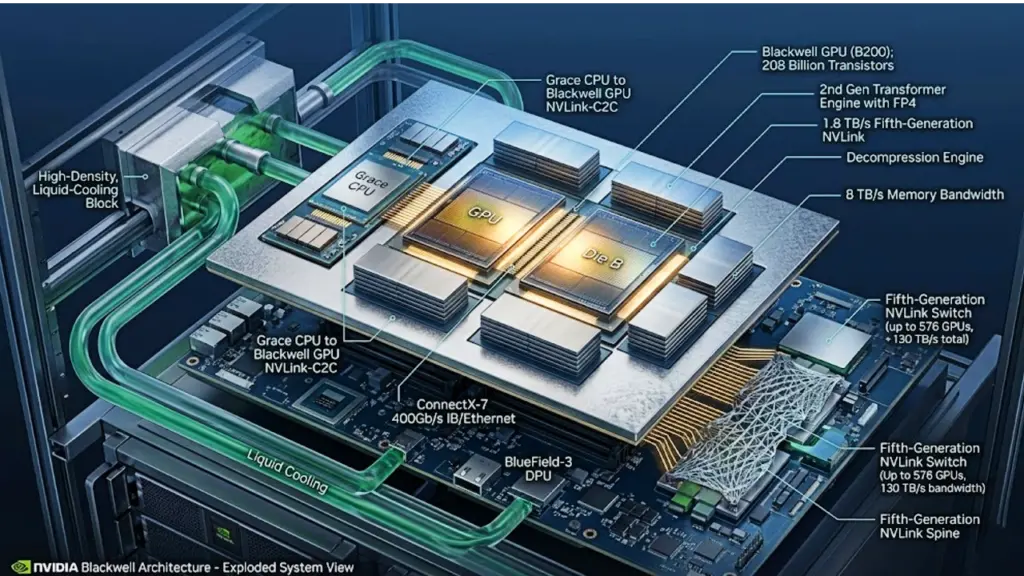
NVIDIA Blackwell Takes an Early Lead in Agentic AI Infrastructure
The race to build more capable and efficient artificial intelligence systems has a new metric. Artificial Analysis has introduced AgentPerf, the industry’s first benchmark specifically designed to evaluate infrastructure performance for agentic AI. In its inaugural release, NVIDIA’s Blackwell Ultra NVL72 platform has secured a leading position, demonstrating significant throughput and efficiency gains in running multiple AI agents simultaneously.
This development is more than just a new set of scores; it signals a critical step towards standardizing the evaluation of hardware critical for the next wave of AI applications. Agentic AI, characterized by its ability to perform tasks autonomously and adaptively, requires infrastructure that can handle complex, multi-agent interactions. AgentPerf aims to provide developers, enterprises, and hardware providers with a clear, comparable measure of system capabilities in this demanding domain.
Quick Take
NVIDIA’s Blackwell Ultra NVL72 platform has emerged as the top performer in the first-ever AgentPerf benchmark for agentic AI infrastructure. This early validation highlights the platform’s efficiency and power in handling multiple AI agents, suggesting it’s well-positioned for the growing demands of autonomous AI systems. However, the benchmark is new, and broader industry adoption and further testing will be crucial to confirm its long-term significance.
What This Means: A New Metric for AI Infrastructure
AgentPerf’s introduction is significant because agentic AI represents a shift from single-prompt, single-response models to systems that can reason, plan, and act over extended periods and in complex environments. Think of AI assistants that can manage your schedule, book travel, and even negotiate on your behalf, all with minimal human intervention. These capabilities necessitate hardware that can not only process massive amounts of data but also manage the state, communication, and execution of numerous independent AI agents concurrently.
The benchmark’s results indicate that NVIDIA’s Blackwell architecture, specifically the NVL72 configuration, is exceptionally well-suited for this workload. The reported “20x more agents per megawatt than NVIDIA’s previous generation” is a substantial efficiency improvement. This translates to the potential for deploying more sophisticated AI agents with lower energy consumption and operational costs.
For infrastructure providers and large enterprises building out AI capabilities, this suggests that platforms like the Blackwell Ultra NVL72 could offer a tangible advantage in performance and cost-effectiveness.
Why It Matters: Paving the Way for Advanced AI Autonomy
The practical implications of efficient agentic AI infrastructure are far-reaching. If AI agents can operate more autonomously and cost-effectively, we can expect to see a proliferation of AI-powered tools and services that were previously impractical due to computational or energy demands. This could accelerate innovation in areas like:
- Automated Workflows: Businesses can deploy AI agents to handle complex, multi-step tasks across departments, from customer service to supply chain management.
- Personalized AI Assistants: More sophisticated personal AI agents could manage daily life, offering proactive assistance in scheduling, communication, and information retrieval.
- Scientific Research: AI agents could autonomously design experiments, analyze data, and accelerate discovery in fields like drug development or materials science.
- Robotics and Automation: Enhanced agentic capabilities could lead to more intelligent and adaptable robots capable of performing complex tasks in dynamic environments.
NVIDIA’s early dominance in this benchmark suggests that hardware capable of high-density, efficient AI agent execution will be a key differentiator. It also puts pressure on competitors to demonstrate comparable or superior performance on this new, specialized workload. The benchmark provides a crucial tool for organizations making significant investments in AI infrastructure, allowing them to make more informed decisions based on concrete performance data.
Practical Impact for Readers
For IT decision-makers and developers evaluating AI infrastructure, the AgentPerf benchmark offers a new lens through which to assess hardware. If your organization is planning to deploy or scale agentic AI applications, looking at performance metrics on benchmarks like AgentPerf will become increasingly important. It means that selecting the right hardware could directly impact the number of AI agents you can run, the complexity of tasks they can perform, and the overall cost of your AI operations.
For those building AI solutions, understanding these infrastructure limitations and capabilities will be key to designing effective and scalable agentic systems.
This is particularly relevant as AI moves beyond simple chatbots to more complex, multi-faceted agents. The ability to run these agents efficiently at scale is what will unlock new levels of automation and intelligence across various industries. The NVIDIA Blackwell Ultra NVL72’s performance suggests a strong contender for these future deployments.
Limitations, Unanswered Questions, and What’s Still Unclear
While the introduction of AgentPerf and NVIDIA’s strong showing are noteworthy, several aspects warrant caution and further observation:
- Benchmark Maturity: AgentPerf is brand new. Its methodologies, the specific workloads it tests, and its long-term relevance will need to be validated by broader industry adoption and scrutiny. Are the tested agentic tasks representative of real-world applications?
- Workload Specificity: The benchmark focuses on agentic AI infrastructure. Performance on other AI workloads (e.g., large language model training, inference for non-agentic tasks) might differ. A holistic view of hardware capabilities is still necessary.
- Competitive Landscape: These are the *first* results. Competitors will undoubtedly respond with their own optimizations and hardware. The performance gap may narrow or shift as the market evolves.
- Software and Optimization: While hardware is critical, the performance of agentic AI also depends heavily on the software frameworks, libraries, and optimization techniques used. The benchmark might not fully capture the interplay between hardware and software.
- Cost and Accessibility: The NVIDIA Blackwell Ultra NVL72 is likely a high-end, enterprise-grade solution. Information on pricing, availability, and accessibility for smaller organizations or individual developers is not yet detailed.
- Definition of ‘Agent’: The benchmark’s interpretation and implementation of what constitutes an ‘agent’ and how their performance is measured are crucial. Different definitions could lead to vastly different results.
It’s important to remember that benchmarks provide a snapshot. Real-world deployment performance can vary based on specific use cases, data, and system configurations.
Key Facts
- Artificial Analysis has launched AgentPerf, the first industry benchmark for agentic AI infrastructure.
- The NVIDIA Blackwell Ultra NVL72 platform achieved leading performance in the initial AgentPerf results.
- The platform reportedly runs 20x more agents per megawatt compared to NVIDIA’s previous generation.
- Agentic AI involves systems that can perform tasks autonomously and adaptively, requiring specialized infrastructure.
- AgentPerf aims to provide a clear comparison for developers, enterprises, and infrastructure providers.
Frequently Asked Questions
What is agentic AI?
Agentic AI refers to artificial intelligence systems designed to act autonomously to achieve specific goals. These agents can perceive their environment, make decisions, and take actions, often in a continuous loop, adapting to new information and circumstances without constant human input.
Why is a benchmark for agentic AI infrastructure needed?
Agentic AI places unique demands on hardware due to the need to manage multiple concurrent agents, their states, and their interactions. A specialized benchmark like AgentPerf is necessary to accurately assess and compare the performance and efficiency of different infrastructure solutions for these complex workloads, which differ from traditional AI tasks.
What does ‘agents per megawatt’ measure?
‘Agents per megawatt’ is a metric of efficiency. It indicates how many AI agents a system can run using a specific amount of energy (one megawatt). A higher number signifies greater efficiency, meaning more AI agent capacity can be supported with less power consumption and potentially lower operational costs.
Is NVIDIA Blackwell the only platform being tested?
The initial results from AgentPerf highlight NVIDIA’s Blackwell Ultra NVL72. As the benchmark gains traction, it is expected that other hardware vendors and platforms will be tested and their results published, allowing for broader comparisons within the industry.
Sources Used
Suggested Cluster Topics
- The Future of Autonomous AI Agents: Capabilities and Challenges
- Comparing AI Infrastructure: Beyond Benchmarks
- NVIDIA’s AI Strategy: From Hardware to Software Ecosystems
- Energy Efficiency in AI: The Growing Importance of Per-Watt Performance
- The Role of Benchmarks in Driving AI Hardware Innovation
- Understanding Agentic AI: Practical Applications and Use Cases
Leave a Reply