NASA Taps Eric Schmidt’s Rocket Venture for Mars, Igniting Competition with SpaceX
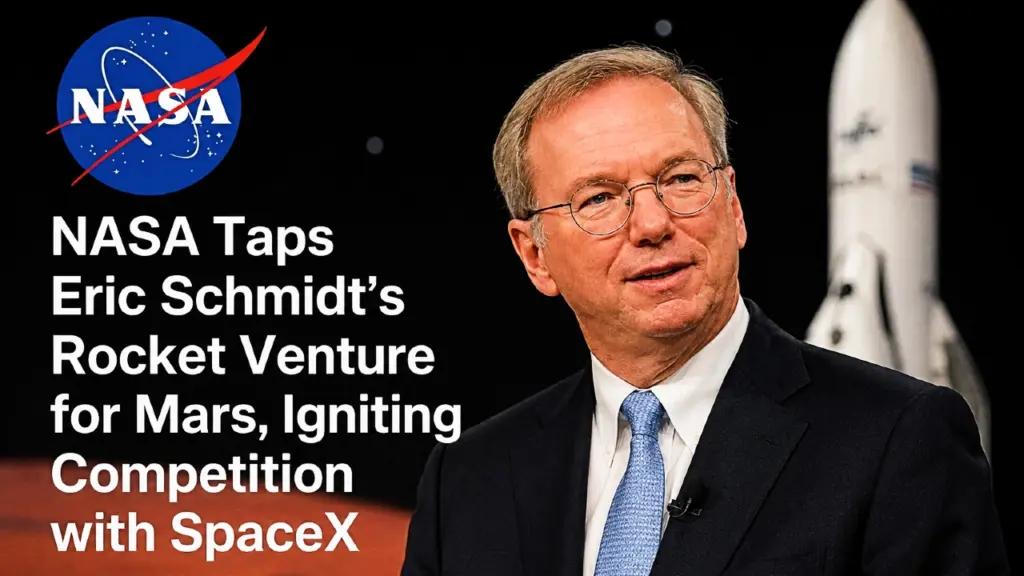
NASA Taps Eric Schmidt’s Rocket Venture for Mars, Igniting Competition with SpaceX
NASA has announced a significant move in its ongoing exploration of Mars, selecting Firefly Aerospace for a mission to deliver scientific instruments to the Martian surface. This decision not only underscores NASA’s strategy of leveraging commercial partnerships but also places the company, which counts Google’s former CEO Eric Schmidt among its key investors, in direct competition with established giants like SpaceX.
The mission, tentatively scheduled for a 2026 launch, aims to transport a payload of scientific instruments to Mars. While the specifics of the payload are still under wraps, the selection of Firefly signifies a growing confidence in the company’s capabilities, particularly its Beta rocket, which is expected to be the workhorse for such ambitious endeavors. This move by NASA is a clear signal that the agency is diversifying its partnerships and fostering a more competitive environment for critical space transport services.
Quick Take
NASA’s choice of Firefly Aerospace for a Mars mission injects a new dynamic into the commercial space sector. It pits a Schmidt-backed venture against established players like SpaceX, suggesting a future where multiple companies vie for lucrative government contracts and interplanetary delivery services. This could accelerate innovation and potentially lower costs for space exploration.
What This Means
For years, SpaceX has been the undisputed leader in private spaceflight, particularly in launching payloads to orbit and beyond. NASA’s reliance on SpaceX for critical missions, including cargo and crew transport to the International Space Station and ambitions for lunar and Martian exploration, has been well-documented. However, the selection of Firefly Aerospace for a Mars mission represents a deliberate effort by NASA to cultivate alternative capabilities.
This diversification is crucial for ensuring mission redundancy, fostering technological advancement through competition, and potentially securing more cost-effective solutions for future space endeavors.
The involvement of Eric Schmidt, a prominent figure in the tech industry, lends significant weight to Firefly Aerospace. His investment and strategic involvement suggest a long-term vision for the company, aiming to compete not just in Earth orbit but also in the more challenging domain of interplanetary travel. This move positions Firefly as a serious contender in the burgeoning market for lunar and Martian logistics.
Why It Matters
The implications of this development extend beyond just a single mission. It signals a potential shift in the commercial space landscape. As NASA and other space agencies increasingly look to private companies for transportation solutions, the competition for these contracts will intensify. This is good news for taxpayers and for the pace of space exploration.
Increased competition can drive down costs, spur innovation in rocket technology, and lead to more frequent and ambitious missions. For readers interested in the future of space, this means a more dynamic and potentially faster-moving frontier.
Furthermore, the inclusion of Firefly Aerospace in high-stakes missions like Mars delivery highlights the maturation of the commercial space industry. Companies are no longer just launching satellites; they are developing the capacity for complex interplanetary operations. This is a critical step towards establishing a sustainable human presence beyond Earth, a long-held aspiration for many.
Practical Impact for Readers
While the immediate impact on the average reader might seem distant, the long-term effects are significant. As space exploration becomes more democratized through commercial partnerships, the technologies developed for these missions often find their way into everyday life, from advanced materials to communication systems. More importantly, this competition could accelerate timelines for ambitious projects, bringing us closer to seeing regular cargo and eventually human missions to Mars.
For those following the space industry, this news means a more compelling narrative. The rivalry between established players and emerging ventures like Firefly Aerospace adds an element of excitement and uncertainty, making the journey to Mars and beyond a more closely watched event. It also opens up new avenues for investment and career opportunities within the rapidly expanding space sector.
Limitations, Risks, and Unanswered Questions
Despite the optimism, several factors warrant caution. Firefly Aerospace, while promising, is still a relatively young company compared to SpaceX. The Beta rocket, its primary launch vehicle for such missions, must consistently demonstrate reliability and success in its upcoming flights. Any significant setbacks in its development or testing could delay or jeopardize NASA’s Mars mission timeline.
The source material does not provide details on the specific scientific objectives of the Mars mission or the exact nature of the payload. Understanding these elements would offer a clearer picture of Firefly’s role and the mission’s scientific value. Additionally, the financial terms of the contract are not disclosed, making it difficult to assess the economic implications fully.
The long-term viability of Firefly Aerospace as a competitor to SpaceX also remains to be seen. SpaceX has a significant head start in terms of flight heritage, infrastructure, and operational experience. While NASA’s support is crucial, Firefly will need to secure additional contracts and demonstrate sustained performance to solidify its position in the market.
Finally, the timeline of a 2026 launch is ambitious. Space missions are notoriously complex, and delays are common due to technical challenges, funding issues, or planetary alignment windows. It remains to be seen if this target date is achievable.
Frequently Asked Questions
What is Firefly Aerospace?
Firefly Aerospace is a private American aerospace manufacturer and spaceflight company that aims to provide launch services for small to medium-sized payloads. It is notably backed by Eric Schmidt, the former CEO of Google.
Why is NASA selecting commercial companies for Mars missions?
NASA increasingly partners with commercial companies to reduce costs, foster innovation, and increase the frequency and capability of space missions. This strategy allows NASA to focus on research and development while leveraging private sector expertise for transportation and logistics.
How does this set up a race with SpaceX?
By selecting Firefly Aerospace, NASA is diversifying its commercial partners for critical missions like Mars. This creates a competitive dynamic where Firefly will vie with SpaceX for future contracts and opportunities in interplanetary cargo and potentially human transport, pushing both companies to innovate and improve their offerings.
What are the risks involved in this mission?
Risks include the reliability of Firefly’s Beta rocket, potential delays in the ambitious 2026 launch timeline, and the general complexities inherent in interplanetary space missions. Firefly is also a newer player compared to established companies like SpaceX.
Leave a Reply