Robotaxi Safety: Why It Needs to Be Engineered, Not an Afterthought
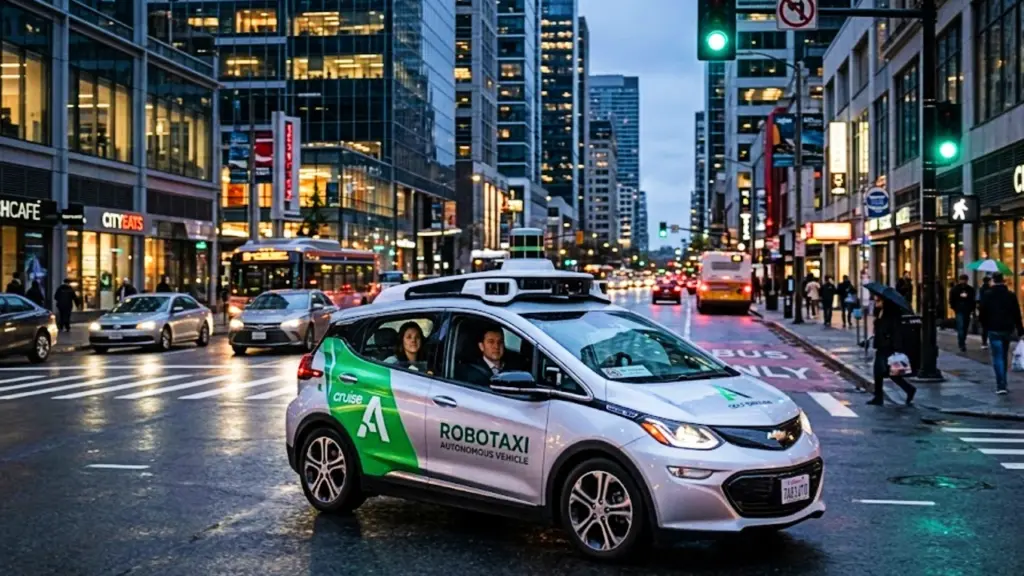
Robotaxis Are Already Here, But Are They Safe Enough?
The familiar sight of a car arriving at your doorstep, only to find no one behind the wheel, is no longer a futuristic fantasy. Robotaxi services are actively operating in dozens of cities, marking a significant shift from experimental prototypes to commercial reality. This burgeoning industry, fueled by advancements in AI and sensor technology, promises a new era of urban mobility.
However, as these autonomous vehicles (AVs) become more commonplace, the critical question of safety looms larger than ever. The conversation needs to move beyond simply deploying vehicles to ensuring that safety is an intrinsic part of their design and operation.
The core challenge, as highlighted by NVIDIA, is that true safety for robotaxis cannot be a superficial addition. It must be deeply embedded into the very architecture of the system, from the hardware and software to the operational protocols. This isn’t about bolting on extra sensors or writing a few more lines of code; it’s about a foundational approach to engineering autonomous systems where safety is paramount from conception through deployment and ongoing operation.
Quick Take
The commercial rollout of robotaxis is accelerating, but the industry’s success hinges on prioritizing safety as a core engineering principle, not a post-deployment fix. This requires a holistic approach to system design and continuous validation.
What This Means for Robotaxi Development
The NVIDIA blog post emphasizes a crucial distinction: safety must be an inherent characteristic of a robotaxi’s design. This implies that the systems responsible for perception, prediction, planning, and control are not merely functional components but are built with rigorous safety considerations at their core. This means developing redundant systems, solid fail-safes, and sophisticated validation processes that go beyond standard automotive safety metrics.
For instance, the perception system, which allows the robotaxi to ‘see’ its environment, needs to be exceptionally reliable, capable of distinguishing between a plastic bag blowing across the road and a child chasing a ball. Similarly, the prediction engine must accurately anticipate the intentions of other road users – pedestrians, cyclists, and human drivers – in complex, unpredictable urban settings.
The planning and control systems then need to translate these perceptions and predictions into safe, smooth, and defensive driving maneuvers.
This engineering philosophy extends to the entire ecosystem. It includes the data infrastructure for training and validating AI models, the cybersecurity measures to protect against malicious attacks, and the operational frameworks for remote assistance and emergency response. Building a safe robotaxi is a complex, multi-faceted engineering challenge that requires expertise across AI, robotics, software engineering, and systems safety.
Why It Matters: Beyond the Hype
The allure of robotaxis is undeniable: reduced traffic congestion, increased accessibility for non-drivers, and potentially fewer accidents caused by human error. However, the rush to market has, at times, overshadowed the immense technical hurdles involved in achieving true operational safety. The industry has seen incidents that underscore the complexity of autonomous driving in real-world conditions.
These events serve as stark reminders that while the technology is advancing rapidly, it is not yet infallible.
A safety-first approach is not just about preventing accidents; it’s about building public trust. Without it, widespread adoption of robotaxi services will remain a distant prospect. Consumers need to feel confident that these vehicles are not only convenient but also unequivocally safe. This confidence is earned through transparent development, rigorous testing, and a demonstrable commitment to safety by manufacturers and operators.
Furthermore, the regulatory landscape is still evolving. As robotaxis move into more cities, regulators will scrutinize their safety performance. A proactive, engineering-led approach to safety will be essential for navigating these regulatory approvals and ensuring long-term viability.
Practical Impact for Readers
For the average person, the rise of robotaxis means a potential new way to get around. You might see them on your streets, perhaps even use them for a ride. The practical impact of a safety-first approach is simple: these services will be more reliable and, critically, safer. This means fewer unexpected incidents, smoother rides, and a greater sense of security when sharing the road with autonomous vehicles.
It also means that the deployment of these services will likely be more measured and geographically focused initially. Companies will need to prove their safety record in specific environments before expanding. This cautious approach, driven by engineering necessity, is ultimately beneficial for the public.
Limitations, Risks, and Unanswered Questions
Despite the progress, significant challenges remain. The ability of current AV systems to handle ‘edge cases’ – rare, unpredictable events that fall outside typical driving scenarios – is still a major concern. How do these systems react to unusual weather conditions, complex construction zones, or unpredictable human behavior that deviates significantly from norms?
Another key question is the long-term maintenance and operational safety of these fleets. Who is responsible for ensuring the continuous integrity of the sensors, software, and hardware over the vehicle’s lifespan? How are remote operators trained and equipped to handle complex emergencies?
The ethical considerations surrounding AV decision-making in unavoidable accident scenarios also persist, though the focus of the NVIDIA article is on engineering proactive safety to minimize the likelihood of such dilemmas. Transparency in reporting incidents and the methodology used for safety validation are also areas where the industry needs to mature.
Key Facts
- Robotaxi services are transitioning from prototypes to commercial operations in numerous cities.
- True safety in robotaxis must be an intrinsic part of the system’s design, not an add-on.
- This requires rigorous engineering across perception, prediction, planning, and control systems.
- Public trust is essential for the widespread adoption of robotaxi services.
- Handling ‘edge cases’ and ensuring long-term operational safety are ongoing challenges.
Frequently Asked Questions
What is the main challenge for robotaxi safety?
The primary challenge is ensuring that safety is deeply engineered into the robotaxi’s systems from the ground up, rather than being treated as an afterthought or a series of add-on features. This requires a holistic approach to design and validation.
How does NVIDIA view robotaxi safety?
NVIDIA emphasizes that safety must be built into the core architecture of robotaxi systems, encompassing hardware, software, and operational protocols, and must be validated rigorously.
What are ‘edge cases’ in autonomous driving?
Edge cases refer to rare, unpredictable, or unusual driving scenarios that are difficult for autonomous systems to handle, such as extreme weather, complex construction zones, or highly erratic human behavior.
Why is public trust important for robotaxis?
Public trust is crucial for the widespread adoption of robotaxi services. Without confidence in their safety and reliability, consumers will be hesitant to use them, hindering the industry’s growth.
Leave a Reply