Samsung Display Reportedly Starts Making Foldable iPhone Screens
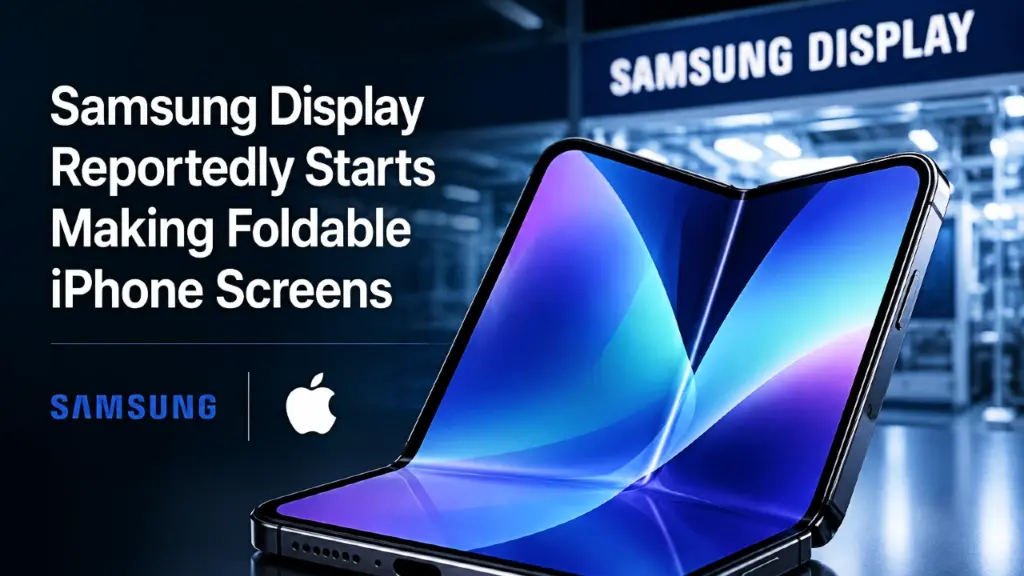
Whispers from the supply chain suggest a significant step has been taken towards Apple’s first foray into the foldable smartphone market. According to reports, Samsung Display has begun the production of OLED panels destined for Apple’s highly anticipated foldable iPhone, rumored to be branded as the ‘iPhone Ultra’.
This development, if accurate, indicates that Apple is moving closer to a potential launch, with industry watchers pointing to a September debut. The claim originates from a source that previously identified Samsung Display as the supplier for these specialized foldable displays.
Quick Take
Samsung Display has reportedly begun production of foldable OLED panels for Apple’s first foldable iPhone. This suggests Apple is moving forward with its foldable device plans, with a potential September launch on the horizon. The move leverages Samsung’s established expertise in foldable display technology.
What This Means
The commencement of panel production by Samsung Display is a tangible sign that the foldable iPhone project is progressing beyond the development and testing phases. For Apple, this represents a significant expansion into a smartphone category where competitors like Samsung, Google, and Motorola have already established a presence. Apple’s entry is often seen as a validation of a market segment, and the use of Samsung Display as the sole supplier highlights the critical role Samsung plays in the broader mobile display industry, even as a competitor to Apple in the smartphone market itself.
The report specifically mentions that Samsung Display’s facility in Vietnam has commenced operations for this purpose. This geographical detail is noteworthy, as manufacturing operations are often spread across various regions for logistical and cost efficiencies. The fact that production has started implies that Apple has given the green light, likely after Samsung Display achieved a satisfactory manufacturing yield rate, reportedly exceeding 80%.
Why It Matters
For consumers, this news could signal the imminent arrival of a new type of iPhone, one that offers a larger screen experience in a more compact form factor. Foldable phones are still a niche but growing segment of the smartphone market, appealing to users who want enhanced productivity or a more immersive media consumption experience without carrying a tablet.
Apple’s entry could dramatically increase the visibility and adoption of this technology, potentially pushing the entire foldable market forward.
From a business perspective, this is a major win for Samsung Display. Despite Samsung Electronics being a direct competitor in the smartphone space, Samsung Display often supplies components to other manufacturers, including Apple. This contract underscores Samsung’s dominance in the OLED and foldable display market. It also suggests a strategic reliance on established players for critical, high-tech components, a common practice for companies like Apple that prioritize quality and supply chain security.
The reported September launch window aligns with Apple’s typical iPhone release cycles, though foldable devices have historically faced production challenges. If Apple manages a timely launch, it would be a testament to the maturity of foldable display technology and Apple’s ability to integrate it into its ecosystem.
Practical Impact for Readers
If you’re an Apple enthusiast or someone intrigued by the potential of foldable phones, this news means a new option might be available sooner than expected. While pricing and specific features remain speculative, the move towards a foldable form factor suggests Apple is exploring new ways to differentiate its flagship devices. For those considering a foldable phone, Apple’s entry could also lead to increased competition, potentially driving down prices or improving features across the board in the future.
However, it’s crucial to remember that this is still based on supply chain reports. Apple is notoriously secretive, and plans can change. The actual launch date, device specifications, and market availability are subject to Apple’s final decisions.
Limitations and Unanswered Questions
Several key questions remain unanswered. The exact specifications of the foldable display, such as its size, resolution, and durability features, are not yet public. The specific design of the foldable iPhone, including whether it will adopt a book-style fold or a clamshell design, is also unclear.
Furthermore, while Samsung Display is reportedly the supplier, the manufacturing yield of over 80% is a positive sign, but scaling production to meet Apple’s demand is a significant undertaking. Any unforeseen manufacturing issues could impact the launch timeline or initial availability.
The report also doesn’t specify the exact model or configuration of the foldable iPhone. While ‘iPhone Ultra’ is a rumored name, Apple has a history of surprising with its product naming conventions. The device’s positioning within Apple’s lineup – whether it’s a premium, niche offering or a more mainstream device – is also a point of speculation.
Frequently Asked Questions
When might the foldable iPhone be released?
Reports suggest a potential launch in September, aligning with Apple’s typical iPhone release schedule.
Who is supplying the foldable displays?
Samsung Display is reportedly the supplier of the foldable OLED panels for the device.
What is the status of production?
Samsung Display has reportedly received approval to begin OLED panel production after achieving over 80% manufacturing yield, with its facility in Vietnam already operational.
What are the potential benefits of a foldable iPhone?
A foldable iPhone could offer a larger screen experience in a more compact form factor, enhancing productivity and media consumption.
Leave a Reply