Signal’s Meredith Whittaker: AI Chatbots Aren’t Your Friends, They’re Sophisticated Tools
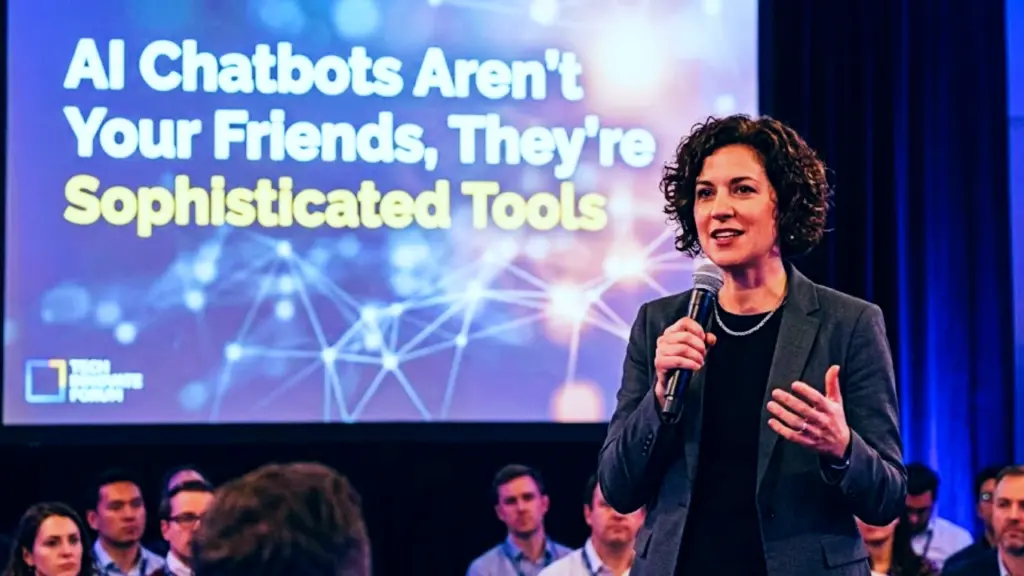
In a world increasingly saturated with artificial intelligence, the line between helpful tool and perceived companion is blurring. Meredith Whittaker, the president of Signal, a non-profit organization known for its secure messaging app, is actively pushing back against the anthropomorphism of AI chatbots. Her core message is simple, yet critical: AI chatbots are not your friends.
They are sophisticated tools, designed and deployed with specific objectives, and understanding this distinction is paramount for navigating our evolving digital interactions.
Quick Take
Meredith Whittaker’s stance on AI chatbots serves as a crucial reminder that these systems are not sentient beings capable of genuine friendship or empathy. They are complex algorithms designed to generate responses based on vast datasets, and their outputs can be influenced, manipulated, or inherently biased. Users should approach AI chatbots with a healthy dose of skepticism, recognizing their limitations and potential for misuse rather than treating them as trusted confidantes.
What This Means
Whittaker’s cautionary notes address a growing trend where users are increasingly treating AI chatbots as if they possess human-like qualities. This can lead to misplaced trust, over-reliance, and a misunderstanding of the technology’s actual capabilities and inherent risks. When we attribute human emotions or intentions to AI, we risk overlooking its programmed nature and the potential for its outputs to be deceptive or harmful.
This perspective is vital because it grounds our understanding of AI in technical reality, rather than aspirational fiction.
The underlying issue is that the current generation of AI chatbots, while impressive in their ability to mimic human conversation, operate on statistical probabilities and pattern recognition. They do not possess consciousness, personal beliefs, or genuine understanding. Their responses are a function of their training data and the algorithms that process it.
This means they can inadvertently perpetuate biases present in their training data, generate misinformation, or be steered by those who control their development and deployment to serve particular agendas.
Whittaker’s emphasis on the ‘tool’ aspect of AI chatbots encourages a more pragmatic and critical engagement. It means users should question the information provided, be aware of potential manipulation, and not expect emotional support or genuine companionship. This perspective is particularly important given the rapid integration of AI into various aspects of our lives, from customer service to content creation.
Why It Matters
The hype surrounding AI often paints a picture of near-sentient machines capable of profound understanding and companionship. Whittaker’s intervention is a necessary dose of reality. If users believe chatbots are their friends, they might share sensitive personal information, accept generated content uncritically, or even develop unhealthy emotional dependencies.
This is especially concerning when considering the commercial interests often driving AI development. Companies may design chatbots to be persuasive, to encourage engagement, or to subtly influence user behavior, all under the guise of helpfulness.
Furthermore, the notion of AI as a ‘friend’ can obscure the significant power dynamics at play. Who controls the AI? What data is it trained on? What are its underlying objectives? Without this critical lens, users are susceptible to the agendas of those who build and deploy these systems. Whittaker’s call to remember that AI chatbots are not friends is a call for digital literacy and critical thinking in the age of advanced algorithms.
It encourages users to maintain agency and to view these technologies as what they are: powerful, but ultimately artificial, constructs.
This perspective also has implications for the future of human interaction and the digital public sphere. If we outsource our conversations and information gathering to entities that lack genuine understanding or ethical grounding, we risk eroding the quality of our discourse and our relationships. The push for AI to be seen as a friend could inadvertently devalue authentic human connection.
Practical Impact for Readers
For everyday users, Whittaker’s message translates into actionable advice:
- Maintain Skepticism: Treat AI-generated information with the same critical eye you would any other source. Verify facts, especially on important or sensitive topics.
- Understand Limitations: Recognize that chatbots do not have emotions, personal experiences, or true understanding. They cannot offer genuine empathy or companionship.
- Guard Your Data: Be mindful of the personal information you share with AI chatbots. Their data handling practices may not be as transparent or secure as you assume, and the data could be used for commercial purposes.
- Be Aware of Influence: Understand that AI responses can be shaped by their training data and the intentions of their creators. They might subtly push certain viewpoints or products.
- Prioritize Human Connection: While AI can be a useful tool, it should not replace genuine human interaction, friendship, or professional advice.
By adopting this pragmatic approach, readers can leverage the benefits of AI chatbots without falling prey to the potential pitfalls of misplaced trust and anthropomorphism.
Limitations, Risks, and Unanswered Questions
While Whittaker’s warning is timely and important, several questions and risks remain:
- Defining ‘Friend’: The term ‘friend’ is subjective. While Whittaker clearly means a genuine, sentient companion, some users might find a chatbot that is consistently helpful and responsive to be a ‘friend’ in a functional sense. Clarifying these distinctions is important.
- Balancing Utility and Caution: How do we strike a balance between encouraging the beneficial use of AI tools and warning against over-reliance or misplaced trust? Overly dire warnings might discourage adoption of genuinely useful applications.
- Commercial Pressures: The drive to make AI chatbots more engaging and ‘likable’ for commercial purposes directly conflicts with the need for users to view them critically. This creates a difficult tension for developers and users alike.
- Future AI Development: As AI becomes more sophisticated, will the distinction between a tool and a perceived companion become even more blurred? How will ethical guidelines evolve to address this?
- Data Privacy and Security: The exact mechanisms by which AI companies store, process, and potentially monetize user interactions with chatbots are often opaque. This remains a significant risk.
Whittaker’s perspective is a vital starting point for a broader conversation about our relationship with AI, but the nuances of this evolving technology mean that vigilance and ongoing critical assessment will be necessary.
Frequently Asked Questions
What is Signal’s stance on AI chatbots?
Signal’s president, Meredith Whittaker, strongly advocates for users to understand that AI chatbots are not sentient beings or ‘friends.’ She emphasizes that they are sophisticated tools with specific functionalities and potential limitations, urging users to approach them with critical skepticism rather than emotional reliance.
Why shouldn’t I treat AI chatbots like friends?
Treating AI chatbots like friends can lead to misplaced trust, oversharing of personal information, and an uncritical acceptance of generated content. Chatbots lack genuine consciousness, emotions, and understanding, and their responses can be biased, manipulated, or factually incorrect. They are designed to perform tasks, not to offer genuine companionship.
What are the risks of anthropomorphizing AI chatbots?
The risks include developing unhealthy emotional dependencies, compromising data privacy by sharing sensitive information, being susceptible to manipulation or misinformation, and devaluing authentic human connection. It can also lead to a misunderstanding of the technology’s capabilities and the commercial interests behind its development.
How should I interact with AI chatbots?
You should interact with AI chatbots as you would a sophisticated tool. Maintain a critical mindset, verify any information provided, be cautious about the data you share, and understand that their responses are based on patterns in data, not genuine understanding or personal experience. Prioritize human relationships for genuine connection and support.
Leave a Reply