AI in the Classroom: How Universities Are Adapting
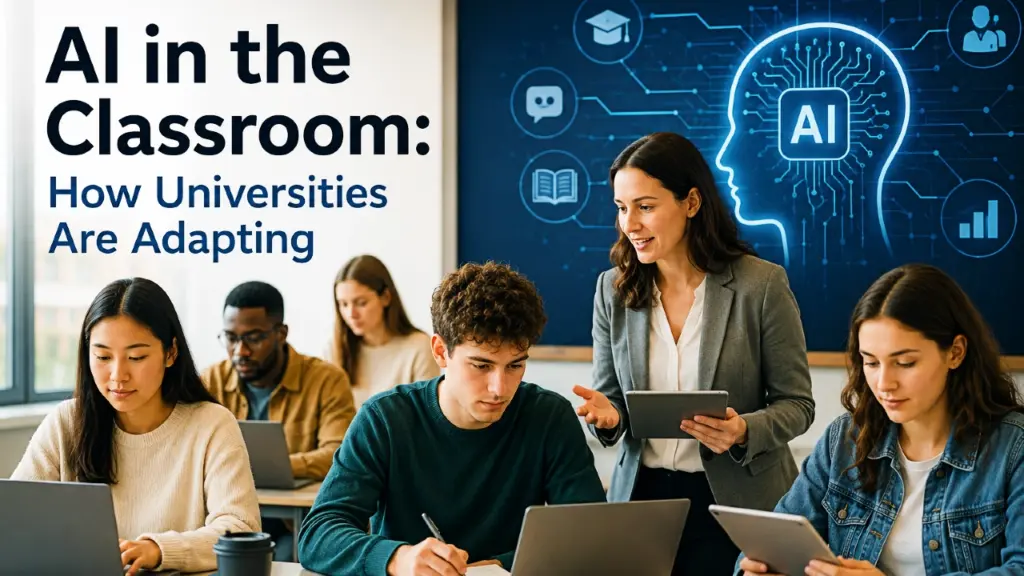
AI in the Classroom: How Universities Are Adapting
The rapid integration of artificial intelligence into nearly every facet of professional life presents a significant challenge for higher education. Universities, traditionally slower to adapt to technological shifts, are now facing the urgent need to prepare students not just for jobs that exist today, but for a future where AI will be an indispensable tool.
The question is no longer if AI will impact education, but how effectively institutions can pivot to harness its potential while mitigating its risks.
Google’s recent focus on how higher education is engaging with AI, particularly through tools like Gemini and NotebookLM, highlights a broader trend. While the specifics of these Google initiatives are geared towards enhancing research and learning experiences, they signal a crucial acknowledgment from major tech players that universities are a key battleground for AI adoption.
This isn’t just about teaching students to use AI; it’s about fundamentally rethinking curricula, pedagogical approaches, and the very skills deemed essential for graduates.
Quick Take
Universities are starting to incorporate AI tools and concepts into their academic offerings, recognizing the necessity of preparing students for an AI-integrated workforce. This involves both teaching students how to use AI effectively and critically, and potentially reshaping how research and learning are conducted on campus.
What This Means
The push for AI integration in universities signifies a critical juncture for higher education. It suggests a move away from a purely theoretical or skills-based education towards one that embraces AI as a co-pilot for learning and innovation. For students, this could translate into more personalized learning pathways, enhanced research capabilities, and a curriculum that directly addresses the skills demanded by an AI-driven economy.
For institutions, it means investing in new technologies, training faculty, and potentially redesigning courses to include AI literacy and application.
The underlying principle is that AI is becoming a fundamental tool, akin to a calculator or a word processor, but with far more profound implications. Universities are exploring how to leverage AI to augment human capabilities, rather than replace them entirely. This involves teaching students how to prompt effectively, critically evaluate AI-generated outputs, and understand the ethical considerations surrounding AI use.
The goal is to foster a generation of graduates who are not only proficient in their chosen fields but also adept at collaborating with AI systems.
Why It Matters
The stakes are high. Graduates entering the workforce will increasingly be expected to navigate an AI-saturated professional environment. Universities that fail to adapt risk producing alumni who are ill-equipped for the demands of modern careers, potentially widening the skills gap and impacting their graduates’ long-term employability. Beyond individual career prospects, the broader societal impact is significant.
A well-educated populace, capable of understanding and utilizing AI responsibly, is crucial for innovation, economic growth, and informed public discourse.
The approach taken by universities will shape the future of knowledge creation and dissemination. By integrating AI tools, institutions can potentially accelerate research, uncover new insights, and make complex information more accessible. For example, tools that can summarize vast amounts of research or help draft initial outlines could free up valuable student and faculty time for higher-order thinking, critical analysis, and creative problem-solving. This is not about outsourcing thinking, but about augmenting it.
Furthermore, this shift forces a re-evaluation of what constitutes essential learning. While foundational knowledge remains critical, the ability to effectively leverage AI tools, understand their limitations, and adapt to new AI developments will become paramount. This also has implications for academic integrity, requiring institutions to develop new policies and guidelines around AI usage in coursework and assessments.
The conversation needs to move beyond simply detecting AI-generated text to fostering a culture of responsible and ethical AI integration.
Practical Impact for Readers
For students, this means actively seeking out courses and opportunities that incorporate AI. Look for programs that emphasize AI literacy, data science, and computational thinking. Don’t shy away from using AI tools for your studies, but always do so critically and ethically. Understand the capabilities and limitations of tools like Gemini or NotebookLM, and learn how to use them to enhance your learning and research, not to bypass it.
For educators and administrators, the message is clear: proactive engagement is necessary. This involves professional development for faculty on AI tools, curriculum review to identify areas for AI integration, and the development of clear institutional policies on AI use. Experimentation with pilot programs, like those hinted at by Google’s engagement with universities, can provide valuable insights into effective implementation strategies.
 Product image
JBL Go 4
Ultra-Portable, Waterproof and Dustproof Bluetooth Speaker, Big JBL Pro Sound with Punchy bass, 7-Hour Built-in Battery, Made in Part with Recycled Materials (Black)|
Product details are provided by the site editor. Check Amazon for the latest price and availability.
Limitations, Risks, and Unanswered Questions
While the move towards AI integration is necessary, it’s fraught with challenges. The rapid pace of AI development means that curricula can quickly become outdated. Ensuring equitable access to AI tools and training across diverse student populations is another critical concern; not all students will have the same resources or technical background. The potential for over-reliance on AI, leading to a decline in critical thinking or fundamental skill development, remains a significant risk.
Furthermore, the ethical implications of AI in education are vast. Issues of data privacy, algorithmic bias, and the potential for AI to exacerbate existing inequalities need careful consideration and solid safeguards. Universities must navigate these complexities transparently and collaboratively with students, faculty, and technology providers. The long-term impact on the job market itself is also an evolving question; while AI will create new roles, it will undoubtedly transform or eliminate others, a dynamic that educational institutions must continuously monitor and respond to.
Frequently Asked Questions
What are universities doing to prepare students for AI?
Universities are exploring various approaches, including integrating AI tools into research and learning platforms, updating curricula to include AI literacy and ethical considerations, and providing faculty training. The goal is to equip students with the skills to use AI effectively and critically in their future careers.
Are universities banning AI tools?
While some institutions may have initial concerns or implement temporary restrictions to understand the implications, the broader trend appears to be towards integration and education rather than outright bans. The focus is shifting to responsible use and understanding AI’s capabilities and limitations.
How can students benefit from AI in their education?
Students can benefit by using AI tools to enhance research, personalize learning, get help with complex concepts, and improve writing and analytical skills. However, it’s crucial to use these tools ethically and critically, ensuring they augment rather than replace genuine learning and understanding.
What are the risks of AI in higher education?
Risks include over-reliance on AI leading to diminished critical thinking, potential for academic dishonesty, data privacy concerns, algorithmic bias, and the challenge of keeping curricula up-to-date with rapid AI advancements. Ensuring equitable access to AI tools and training is also a concern.
Leave a Reply