US Ban on Anthropic Models: More Than Just a Security Scare
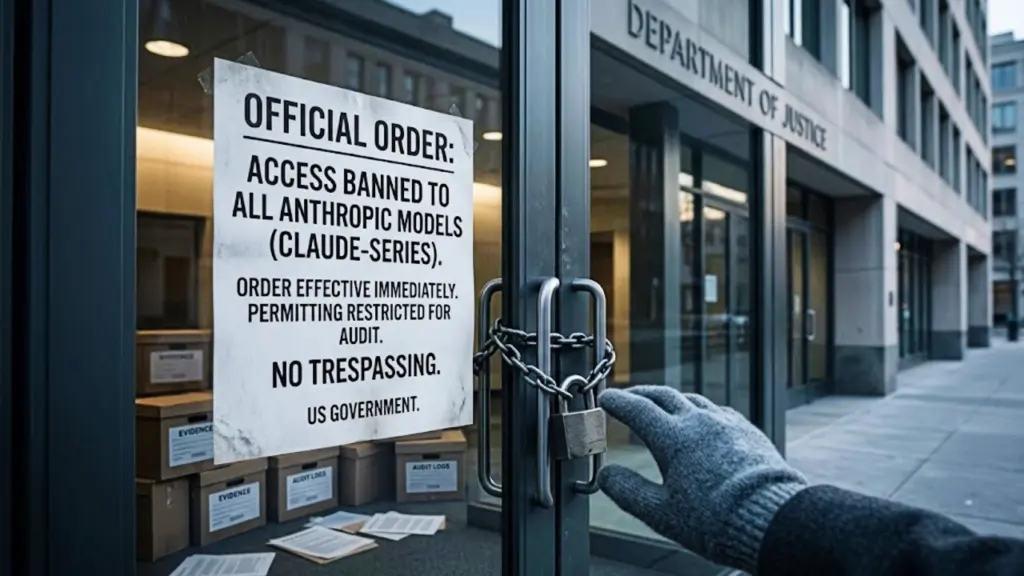
The US Government’s Ban on Anthropic Models: A Deeper Look
The recent US government action restricting access to certain Anthropic AI models has been met with a variety of interpretations. While the immediate narrative often centers on preventing potential misuse or ‘AI jailbreaks,’ a closer examination of the context and the entities involved suggests a more complex web of strategic considerations. It’s a move that appears less about a specific technical vulnerability and more about controlling the flow of advanced AI capabilities in a rapidly evolving global landscape.
Quick Take
The US government’s ban on specific Anthropic AI models is unlikely to be a reaction to a demonstrated ‘AI jailbreak’ threat. Instead, it points to broader concerns about national security, economic competitiveness, and the strategic implications of advanced AI development, particularly concerning potential foreign access to modern technology.
What This Means
The core of this development is a strategic regulatory intervention. Instead of a direct response to a discovered flaw in Anthropic’s AI models that could be easily exploited, the ban signals a more proactive, albeit opaque, government stance on controlling the proliferation of powerful AI technologies. The specific models targeted, and the reasoning provided, often remain vague, which is typical for actions taken under national security umbrellas.
This ambiguity allows for broad interpretation but also suggests that the underlying reasons might be multifaceted, encompassing concerns about the potential for these models to be acquired or leveraged by adversarial nations or entities for purposes that could undermine US interests.
Why It Matters
This situation is significant because it highlights the increasing intersection of AI development, national security, and economic policy. Advanced AI models, like those developed by Anthropic, represent a form of intellectual property and technological capability that governments are increasingly keen to protect and control. The implications extend beyond just one company or one set of models.
It suggests a potential pattern for how the US government might approach the export and domestic use of other advanced AI technologies in the future. If the ban is indeed driven by geopolitical concerns, it could signal a tightening of controls on AI talent, research, and deployment, potentially impacting international collaboration and the global AI race. The narrative around ‘jailbreaks’ might be a convenient, publicly palatable explanation, but the real drivers are likely more strategic, focusing on maintaining a technological edge and preventing rivals from gaining access to sophisticated AI tools that could have military or economic applications.
Furthermore, this action puts a spotlight on the delicate balance between fostering innovation and ensuring security. Overly restrictive measures could stifle research and development, both domestically and internationally. Conversely, a lack of control could lead to unforeseen risks. The focus on Anthropic, a company known for its emphasis on AI safety, also raises questions about the criteria used for such bans.
If even companies prioritizing safety are subject to restrictions, it suggests that the concerns are broader than just the AI’s inherent tendency to behave unexpectedly.
Practical Impact for Readers
For individuals and businesses relying on or interested in Anthropic’s AI models, the immediate impact is uncertainty. Access to certain tools may be curtailed, forcing a re-evaluation of AI strategies and potentially leading to the adoption of alternative solutions. Developers and researchers might find themselves navigating a more complex regulatory environment, with potential restrictions on data usage, model deployment, and international collaboration.
For investors, it underscores the geopolitical risks inherent in the AI sector, where government policy can significantly influence market dynamics and company valuations. It also serves as a reminder that the AI industry, despite its rapid growth, is still subject to significant external controls, particularly when national interests are perceived to be at stake.
Limitations, Risks, and Unanswered Questions
The primary limitation in analyzing this situation is the inherent opacity surrounding government national security decisions. The specific technical details that might have triggered such a ban, if any, are rarely made public. This leaves room for speculation about the true motivations. Were there specific vulnerabilities identified, or is this a preemptive measure based on potential future risks? What is the precise scope of the ban – does it affect all Anthropic models, or only specific versions? How will this ban be enforced, and what are the penalties for non-compliance?
A significant risk is that such bans, if not clearly communicated and justified, can create a chilling effect on AI research and development. Companies may become overly cautious, fearing similar actions, which could slow down progress. There’s also the risk of misinterpretation, where the public or industry might focus on the wrong threat (like a simple ‘jailbreak’) while the real strategic concerns are left unaddressed.
The long-term impact on international AI collaboration and the global AI supply chain remains a critical unanswered question. Will this lead to further fragmentation, or will it spur more solid international dialogue on AI governance?
Key Facts
- The US government has implemented a ban on certain Anthropic AI models.
- The stated rationale for such bans can sometimes be a simplification of more complex underlying reasons.
- Advanced AI models are increasingly viewed as strategic assets with national security implications.
- Government regulations can significantly impact the AI industry, influencing innovation and market access.
- The opacity of national security decisions makes it challenging to ascertain the precise reasons for specific regulatory actions.
Frequently Asked Questions
What is Anthropic?
Anthropic is an AI safety and research company that develops large language models, aiming to build reliable, interpretable, and steerable AI systems. They are known for their Claude family of AI assistants.
Why would the US government ban AI models?
Governments may ban or restrict AI models for various reasons, including national security concerns, preventing misuse (e.g., for disinformation, cyberattacks, or weapons development), economic protectionism, or ensuring compliance with ethical and safety standards. The specific reasons for any given ban are often not fully disclosed.
Is this ban related to AI safety?
While AI safety is a broad concern, a ban might be triggered by specific safety issues or, more broadly, by the potential for misuse of powerful AI capabilities that could compromise national security or economic stability, irrespective of the developers’ safety focus.
What are the implications of such bans for AI innovation?
Bans and restrictions can have mixed implications. They can encourage a focus on safety and security, but they can also slow down innovation by limiting access to modern tools, hindering research, and creating uncertainty for developers and businesses.
Sources Used
Suggested Cluster Topics
- The Geopolitics of AI: How Nations Compete for Dominance
- AI Export Controls: Balancing Innovation and National Security
- Understanding AI Safety vs. AI Security: Key Differences
- The Economic Impact of AI Regulation on Startups
- Future of AI Development: Open Source vs. Proprietary Models
- Navigating Government Oversight in the AI Industry
Leave a Reply