From VLC to Robotics: The Quiet Engineer Optimizing Our Machines
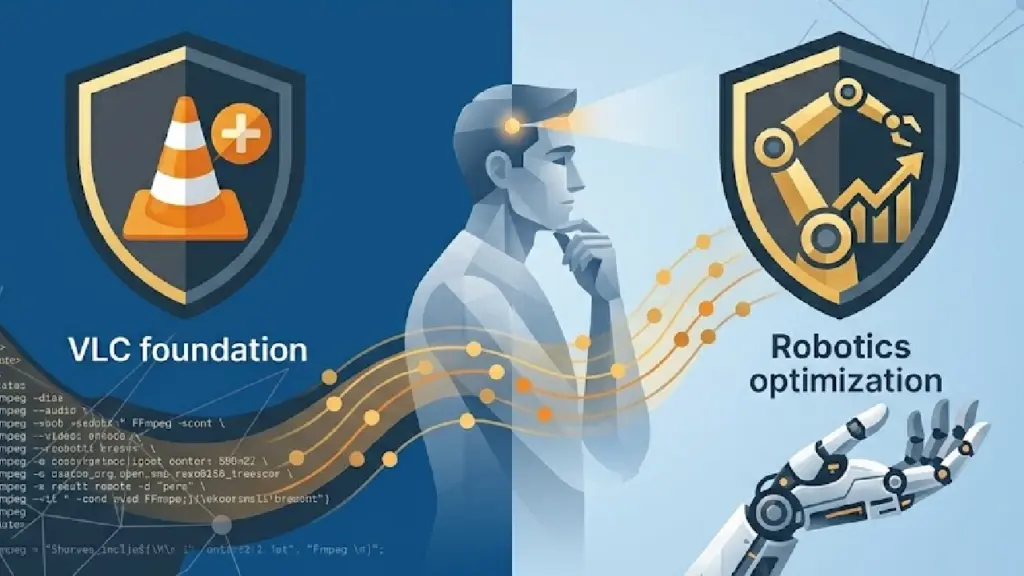
The Quiet Architect of Smooth Playback Enters Robotics
Many of us have benefited from the work of Jean-Baptiste Quéru, even if we didn’t know his name. He was instrumental in making VLC Media Player, a ubiquitous and free video playback software, perform with remarkable efficiency. Now, Quéru is pivoting his considerable talents to a new, arguably more complex domain: robotics. This transition, while perhaps not grabbing headlines with the fervor of AI breakthroughs, represents a significant development in the ongoing quest to make our physical machines more capable and reliable.
Quéru’s move isn’t about developing new AI algorithms or building novel robotic hardware. Instead, it’s about the often-overlooked but critically important work of optimization. For years, he focused on ensuring that video data could be processed and rendered smoothly across a vast array of hardware, minimizing stuttering and maximizing performance. This required a deep understanding of system architecture, resource management, and the intricate dance between software and hardware.
Quick Take
Jean-Baptiste Quéru, a key figure behind the efficiency of VLC Media Player, is now applying his optimization expertise to robotics. This focus on improving the fundamental performance and reliability of robotic systems, rather than solely on advanced AI, could have a practical impact on the development and deployment of robots across various industries.
What This Means for Robotics
The robotics industry, much like the early days of personal computing and digital media, is often characterized by rapid innovation in core capabilities. However, as systems become more complex, the underlying efficiency and stability become paramount. Robots are no longer confined to controlled factory floors; they are increasingly expected to operate in dynamic, unpredictable environments, from warehouses and delivery routes to healthcare and even homes.
This demands a level of performance and reliability that goes beyond just having sophisticated sensors and algorithms.
Quéru’s background suggests a focus on making robotic systems run more efficiently. This could translate to several tangible benefits:
- Improved Performance: Robots might become faster, more responsive, and capable of handling more complex tasks within a given timeframe.
- Reduced Resource Consumption: Optimized systems often require less power and computational resources, which is crucial for battery-powered mobile robots and for reducing operational costs.
- Enhanced Reliability: Smoother operation typically means fewer errors, less downtime, and a greater overall dependability, which is essential for safety-critical applications.
- Broader Hardware Compatibility: Just as VLC runs on a wide range of devices, an optimized robotics framework could potentially be deployed on more diverse and less powerful hardware, democratizing access to advanced robotics.
This approach is particularly relevant in the context of the growing demand for AI-driven automation. While AI provides the intelligence, the underlying hardware and software infrastructure must be solid enough to support it. For instance, consider the challenges of deploying AI in autonomous vehicles or sophisticated industrial automation. Smooth, efficient operation of the robot’s physical components and control systems is a prerequisite for safe and effective AI integration.
This echoes the internal context provided by articles discussing the need for solid systems to support AI’s business impact, such as ‘AI Alone Won’t Change Your Business. The System Running It Will.’
Why It Matters
The significance of this development lies in its focus on foundational engineering. In a field often captivated by the latest AI models or groundbreaking hardware, the meticulous work of optimizing existing systems is frequently understated. However, it is precisely this kind of foundational work that enables broader adoption and unlocks the true potential of more advanced technologies.
For readers interested in the practical rollout of robotics, this signals a positive direction. It suggests that the industry is maturing, moving beyond purely theoretical advancements to address the real-world engineering challenges that hinder widespread deployment. Imagine a future where robotic arms in warehouses move with the fluidity of a well-edited video, or delivery robots navigate complex urban environments with unprecedented stability. This is the kind of practical improvement that optimization expertise can bring.
Furthermore, Quéru’s involvement brings a level of credibility and proven success from a related, albeit different, technological domain. His work on VLC demonstrated an ability to tackle complex technical challenges and deliver user-centric improvements that had a massive global impact. Applying this mindset to robotics could lead to more accessible, reliable, and performant robotic solutions.
Practical Impact for Readers
For the average consumer, the impact might be indirect but significant. As robots become more integrated into daily life – whether as delivery drones, automated assistants, or even in advanced manufacturing that affects product availability and cost – their efficiency and reliability will directly influence the user experience and the economic viability of these services.
Smoother, more dependable robots could mean faster deliveries, more affordable goods, and safer interactions with automated systems.
For professionals in tech, engineering, and related fields, this highlights the enduring importance of systems engineering and optimization. It’s a reminder that groundbreaking AI needs a solid foundation. Companies looking to implement robotics solutions might find that focusing on the underlying operational efficiency, rather than solely on the most advanced AI, can yield more immediate and practical results.
This could also influence hiring trends, emphasizing the need for engineers with deep expertise in system performance and optimization, not just AI specialists.
Limitations, Risks, and Unanswered Questions
While the prospect is promising, it’s important to maintain a grounded perspective. The source material is concise, and details about Quéru’s specific projects or the companies involved are not provided. Therefore, several questions remain:
- Scope of Work: What specific areas of robotics is Quéru focusing on? Is it industrial robots, service robots, autonomous vehicles, or a broader platform?
- Methodology: What specific techniques or approaches is he employing to optimize robotic systems? Is it software-level optimization, hardware-software co-design, or something else?
- Timeline and Impact: When can we expect to see the results of this work, and what will be the tangible metrics of success?
- Challenges: Robotics presents unique challenges compared to video playback, including real-time control, physical interaction, and safety-critical operations. How will Quéru’s expertise translate to these distinct complexities?
The transition from optimizing digital media playback to optimizing physical robotic systems is not a simple one. While the principles of efficiency and resource management are transferable, the real-world physics, safety requirements, and mechanical complexities of robotics introduce a new set of hurdles. It remains to be seen how these challenges will be addressed.
Key Facts
- Jean-Baptiste Quéru was a key figure in optimizing VLC Media Player for efficient performance.
- He is now applying his optimization expertise to the field of robotics.
- The move focuses on improving the fundamental efficiency and reliability of robotic systems.
- Optimized robotic systems could lead to better performance, reduced resource consumption, and enhanced reliability.
- This work aims to address practical engineering challenges hindering widespread robotic deployment.
Frequently Asked Questions
What is VLC Media Player?
VLC Media Player is a free and open-source, cross-platform multimedia player and streamer that plays most multimedia files as well as DVDs, Audio CDs, VCDs, and various streaming protocols. It is known for its versatility and ability to play a wide range of formats without requiring external codecs.
Why is optimization important in robotics?
Optimization in robotics is crucial for ensuring that robots can perform tasks efficiently, reliably, and safely. It helps in reducing power consumption, increasing operational speed, improving responsiveness, and enabling deployment on less powerful hardware, which ultimately makes robots more practical and cost-effective for various applications.
What are the challenges in applying media optimization techniques to robotics?
While principles of efficiency are shared, robotics involves real-time physical interaction, safety-critical operations, and complex mechanical systems. These aspects differ significantly from digital media playback, requiring specialized approaches to address issues like precise motor control, sensor data processing, and dynamic environment interaction.
Leave a Reply